What, Where?
What race is a dozen years older than did the Boston Marathon? Also, it allowed women’s competition before Boston. This race also has featured a deeper field throughout much of its history, and until recently has been more competitive at the top. In fact, this race was long a proving ground for future Boston winners as well as Olympians, some of whom went on to win Olympic medals.
Look no further than USA Cross Country Championships.
The event started in 1883 when Thomas Delany covered 4.25 miles in 26:30 in New York City. A long (too long) 81 years later Marie Mulder ran 2K in 6:51 in Seattle, Washington to win the first women’s championship. Although the race has not been continuously held (there were no championships in some years in the 1890s at early 1900s). Men’s races have ranged from 4K to 8 miles, although most years it has been 10K (6 to 6.5 miles). Women have run from 2K or 2 miles in the early years up to 8K, with 6K being the most common distance.
The format has changed many times, and going back to the advent of the IAAF (now World Athletics) era in the early-mid 1970s, there have actually been two USA cross country championships each year. One traditionally in the fall, and starting in 1974 a second championship was added, usually in January or February, to allow qualification for the IAAF World Championships. (more on that later)
Until 1920 most of the championships were all held in New York City, with Buffalo, NY (1901, along with the Pan American Exposition), and Boston 1917 being the early exceptions. Since 1930 the championship has been held at venues all over the country, from Florida to Washington State.
Who Are the Champions?
Men
Edward Carter (1885-88, and 1892) with five championships was the first multi-champion, with his fastest being 41:35 for 8 miles. George Orton of Canada was the first international winner, running 6.25 miles in 35:58 in 1897, and Orton won again the following year.
Here are the most notable multi-winners after 1890.
8— Pat Porter (1982-’89)
7—Don Lash (1934–40)
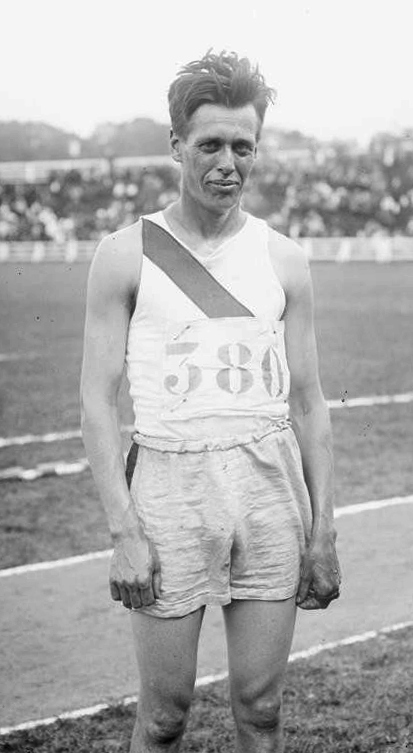
5—Willie Ritola’ (1922–23, 1925–27)
4—Frank Shorter (1970–73)
3—Frank Bellars (1907–08, 1910); Willie Kramer (1909, 1911–12); Fred Wilt (1949, 1952–53)
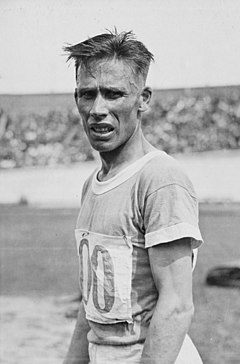
Ritola’ one of the Flying Finns won nine Olympic medals (six gold) in the 1920s, and of course Shorter won two (one gold and the other should be too).
However, no one won as many as three time US Olympian Pat Porter: https://trackandfieldnews.com/pat-porters-8-year-xc-nationals-win-streak-revisited/
(read this article if you have a few minutes!), from Alamosa, via Evergreen, Colorado.
Women
Although the addition of the women’s even did not begin until the 1960s, the women’s cross country championships preceded the running boom by more than a decade. And, like the men there have been a series of multi-winners.
9—Lynn Jennings – 1985, 1987-93, 1996
6—Deena Drossin – 1997-2002 (mix of fall and winter championships)
6—Shalane Flanagan – 2003-04, 2007, 2009, 2011, 2012 (all winter championships)
5—Doris Brown Heritage – 1966, 1968-71
Doris Brown Heritage was the pioneer, with four wins in the early years, and along the way won the International Cross Country Championships five times, and placed 5th in the 800 at the 1968 Olympics—at the time the longest event at the Olympics–with a 2:01.9.
Later, Deena Drossin (Kastor) won seven championships, both in the fall and the spring, on her way to winning an Olympic medal and setting the American record in the marathon. Likewise, Olympic Silver medalist Shalane Flanagan won six titles, all in the winter championships. They were all greats.
However, no one, male or female has matched Lynn Jennings who won nine cross country championships in her career, and those vaulted her to three IAAF cross country championships, and a and Olympic medal in the 10000 meters. https://trackandfieldnews.com/wp-content/uploads/2019/01/lynn_jennings.pdf
Race Formats
From its beginning until the IAAF era (early 1970s) there was one US Championship a year. But when the World Championships were started, a winter “trials” was added, and now it serves as a championship in its own right.
Traditionally, the fall championship was held on the Saturday after Thanksgiving. The ultimate high-level turkey trot. However, starting in 1998, USATF changed the format and created the Club Cross Country championships, usually two weeks later. This race is more diverse, and prior to that time, the overall winner and top 25 (All-American) were the prestige goals, and any team competition was more of an afterthought. Media-wise the fall race received more attention and participation, while the winter event was small but elite event, a prelude to the World XC Championships.
The Club XC Championships emphasize teams, and participation more, and with open men’s and women’s as well as masters (from 40 on up) competition the event usually includes five separate races (Two open men’s races, two men’s masters events, women’s open, and women’s masters).
The winter championships are held in January or February, about six weeks ahead of the World XC championships. Frank Shorter (15K) was the first winner of this race, but typically the men’s race has been 12K. The first women’s winter championship was not held until 1997 when Olympian Amy Rudolf captured the 4K and Nnenna Lynch won the 8K. From 1997 through 2005 the world and USA winter championships had two distances for men and women. Men ran 4K and 12K, and the women ran 4K and 8K.
From 2006-2019 the format has one fall race for men (10K) and the winter race (12K), and for women it has been 6K for fall and 8K in the winter.
The 2020 fall and 2021 winter championships were canceled due to the coronavirus.
My Experiences
I started following the US championships in the late 1970s, and Kenny Moore (Olympic marathoner and author of Bowerman and the Men of Oregon) always had a write-up of the event in Sports Ilustrated. Track and Field News would always follow up a month later with a detailed report and would usually list 60 or 80 of the top 100 runners. But the race always seemed to be on the other side of the country, and over Thanksgiving weekend so post-season and not a great time to fly across the continent.
However, in 1990 we were living in upstate NY and the championships were held at the historic venue at Van Cortland Park in New York City. Talk about the top bucket event of all time! I wouldn’t miss it. Our club ran an XC series that fall and I tried to get the teammates together, but no one else wanted to run. However, my wife had won the women’s division of that series and was up for it.
The race had about 300 men and 200 women. The women went first. Lynn Jennings dominated again, and my wife was about 50th—I wish she had been able to run a year or two earlier (placing 2nd and 3rd at very competitive regional championships in 1988 and 1989), but she still ran solid in 1990.
Pat Porter had his eight-win streak on the line. As I was stretching a half hour before the start upstart Bob Kempainen plopped down next to me on the field and started his own routine. He had finished 2nd place before and I said good luck. Kempainen went on to break Porter’s streak that day, running the course in 30:23 about 8 or 9 seconds ahead of Porter. I would run about 35 minutes and was somewhere in the middle, high 150s or low 160s.
I would not return to any championship cross country for another 23 years. And it changed the trajectory of my life.
After a decade of living in Alaska, I saw that the 2013 fall Club Cross Country championships would be in Bend, OR, not too bad a of a flight. My son was a college student near Seattle, so we met for weekend. It was the first time I had ventured out of Alaska in the winter since I had been there. Some runners in Bend were complaining about the snow on the course and blustery weather. I was thrilled to have 8 hours of daylight and 40 degree temperatures in December! Just a couple months later I started applying for jobs in the Lower 48 and within a year landed a transfer to my homes state, just a few miles where I was born.
I have since competed as a masters in winter 2015 winter (solo) and fall (masters team 7th), 2017 fall (solo), 2018 fall (team 3rd), and 2019 winter (team 2nd) and got a couple age group podiums and a team medal in the process.
I would have run this year, scheduled in for Golden Gate Park in San Francisco (next weekend), at one of the best venues in the country in a great city. I raced there in 2015 and think that the participation is highest of any of the races in the rotation (last year’s race at Lehigh, PA was also well-attended).
Club XC is still the big event, with up to 1,000 open men and 500 women, typically 400-500 runners in the masters (age 40-59) men’s race, and another 200 or so in the 60+ race, and 300 for women masters. However, the winter championship is now the more competitive of the two, with open and junior World Championship or international teams at stake.
Since Club XC was canceled, as well as our state association championship last month, I did not do any specific XC training this fall, nor any XC racing.
Maybe 2021 will be better for us all and we can return.
Questions!
- Did you run cross country in high school or college?
- If you did, when was your last XC conference, regional/state or national championships?
- Do you belong to a club or team that has cross country on the calendar?
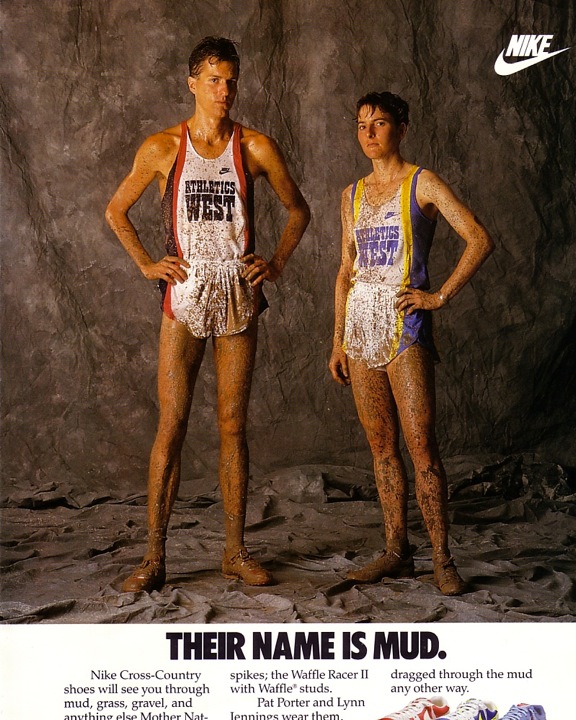
- Do you have any mudder pictures or epic XC stories of your own?

 rrunnin234
Fred Faller is my Grandpa… my earliest memories of him are around 1960, when I turned 6 years old…
He took me on walks around Boston when I was 6 to 11 years old and he would walk my young legs off while he was in his late 60’s to 70 years old…
I remember he only displayed 2 trophies in his house. Both sterling silver..
I distinctly remember the times….1911?, a 5 mile race in 25:25 and a 10 mile race, (year unknown) in 52:50
He kept all his silver plated trophies in the cellar and used them to store old nails and bolts…
I miss him all these years later…
LikeLike
That’s a great story and remembrance! Thanks for commenting.
LikeLiked by 1 person