An Update I Did Not Want to Write

Just the other week I described my fall and comeback from 2016. And was actually going to follow up with some detail of the masters dream seasons of 2018 and 2019. However, here I am drifting among the flotsam and jetsam of 2019, which ended abruptly the other week in Tulsa, OK.

Tulsa was the springboard that launched this journey onto the national masters circuit. So this is a story of bookends.

2017 Breakout

Although I had done the USATF Club Cross Country championships a few times, Tulsa 2017 was my first USATF masters road race championship. Still running as an independent for Boulder Track Club, I traveled with my new mates on the Boulder Road Runners 60+ team. We had a blast, despite some issues with jerseys.

Funny in hindsight. A cardinal rule on the USATF masters circuit is that team members must have the same singlet/jersey. No exceptions.

The team had just switched its uniforms but one of the guys didn’t get his in time, so we spent the afternoon chasing down appropriate race attire so the team could remain eligible. After much debate and some running around the city, the team ended up wearing red Route 66 Marathon singlets, with BRR penned on the front and back. Everyone held their breath as the officious USATF official, who had scolded us all the afternoon before, checked the makeshift uniforms, and gave them the okay.

In the race I was still in the 55-59 age group, but only a few months shy of 60–not where you want to be in a championship race. Plus the field was intimidatingly deep. On a cold blustery morning I started evenly and wound my way through the pack and locked into an age group 3rd place by about 5K, with one guy just ahead, and one only a few seconds back. Even though my legs went numb from the cold and wind, I held on for 55:29 finish, and age grade of 89.5% to finish 3rd in the overall age grading and 3rd in the age group. These were my first podium finishes at the national masters level. Despite one bad injury on the BRR team, they dominated to win the team race and clinched their claim on the 2017 national title. BRR claims USATF age group title at 2017 team champs on a chilly morning

Riding the Wave in 2018 and 2019

That event set me up well for the breakout years of 2018 and 2019, where I went on to win a string of consecutive USATF age group national titles on the roads and some world masters championship medals.

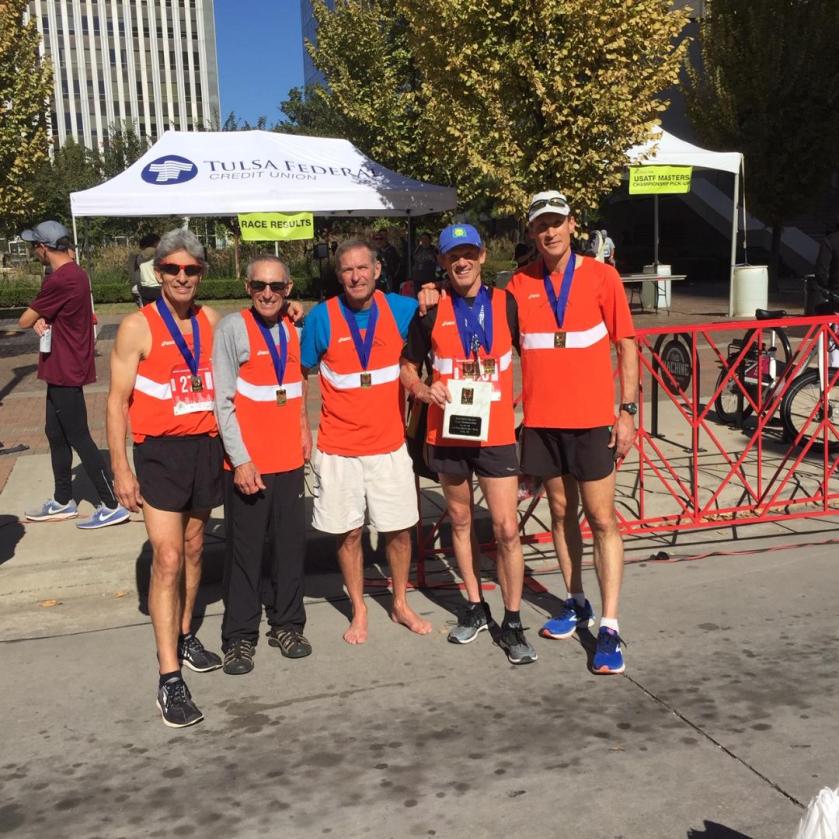
We returned as a team in 2018 and dominated the day, and I won the individual title as well to close out the year with a sweep of USATF masters championship road races. I had added two more in 2019, on top of two runner-up spots in cross country, and came into Tulsa with 390 points on the grand prix. All I’d need was a 4th place finish to win the title.

August through late October had gone well, and even a bit dialed back on training and racing load compared 2018 because I had wanted to be more fresh this time. I was confident that I could still round the hilly circuit in under 56 minutes and break into the 90% age grade range to win that overall title (I had been 2nd twice).

Raced hard but winning felt easy in 2018.
2018 15K age group championship team.

Tulsa 2019

All was good the other week, and I had no issues in the training block, running between 59 and 69 miles over the 8 week period, I felt healthy and strong, planning on 6:00 minute pace for the race. I cut back on my long run on the Saturday before and did a final tune up on Tuesday, just a few reps of 2-3 minutes at goal pace and a couple pick ups. Jogged back, felt solid.

Wednesday I ended up running on the treadmill because an early snowstorm had a arrived. Plan was an easy hour give or take. 30 minutes in, my lower back and glute got a little tight, but I thought nothing of it but slowed down to 8:10 pace. At 40 minutes I noticed it wasn’t going way, and I slowed a bit more, an cut the workout short at 45 minutes. When I got home it definitely hurt. And I hopped into a hot bath and took some ibuprofen.

I reconsidered overnight, but decided to make a go of it. And while the results were a disaster, it’s a good thing that made the trip.

I did not run a step until Saturday morning but all I could to get ready. Ibuprofen every 4-6 hours, lidocaine patches as needed, hot baths–including right before the race (those seemed to help the most).

I warmed up with an easy mile and 2 minute surge approaching race pace. It felt tight. But I felt I could run at least 6 or 8 miles, enough to carry me in with a good lead for the stretch. My main competitor has been running 18:20 or 18:30 for 5K, which is my 15K pace, so I felt I could hold him off, and if not still run under 60 minutes and ahead of everyone else.

At 8:50 we were off! 100 master runners for the 2019 finale! I was not uncomfortable but surprised at the fast pace of some starters–some going out well under 6:00 pace even though you’d expect them to finish in the 65 minute range (closer to 7s). I hit 2 miles in 12:08, just a couple ticks off of last year’s pace and felt that I could sustain this effort, if not a low 6s pace, for the duration. However, just after that I heard rapid footsteps, and the women’s leader Fiona Baily was soon on my heels. We had a number of turns and some rolling hills and I just ran by feel. But that 3rd mile (which I missed) was a 6:24. She pulled way, wearing the most talked about shoe ever, the Next%s and I got to thinking that indeed there must be something to those. And in the 4th mile another guy passed me back, also wearing Next%s.

Those two pulled away and I was running alone, with splits of 6:03 (some downhill) and 6:24 (rolling), and that 5th mile I was starting to feel actual (rather than tightness) pain in my lower back and glutes. It was taking a lot of concentration just to keep going. I was slowing. On the long downhill toward the river the 2nd woman Melissa Gasek caught me, and she said she’d buy me a beer if I helped her catch her competitor Bailey, who was a block or so ahead. I picked up the effort, feeling like I was on sub 6 pace, but each stride was stabbing. And after a few minutes, just had to drop back. My 6th mile was a 6:40 on a stretch that I covered in 5:50 last year.

My race was in trouble. Somewhere around 6.7 to 7 miles, by then only running a 7:30s pace, the first competitor in my age group passed by. I stopped just before the long bridge that spans the Arkansas River, thinking of just dropping out. A pack with two more more age group competitors ran past, asking if I was okay.

Not.

So my was my own title going down the drain, but the team’s 2nd place was also in jeopardy. If I did not finish, we would lose our grand prix podium standing. So I decided to go the extra mile on the out and back portion over the bridge. And resumed running at 9 to 10 minute pace. At about 8 miles I had to walk for a half mile, but somehow I as able to resume a very slow jog to the finish.

68 minutes with final 5K of 29 minutes. That was brutal. But by finishing the race, we held onto 2nd place on the day and for the grand prix. I do feel the effort was worth it. Even though I lost the individual title that day, in a worst case runners scenario, by finishing the course I also held onto a 2nd place. It’s a bitter pill to swallow but had a great three year run leading up to this race. And it masters running, being at the top usually means you are going to crash down from time time. Limping in at the finish in 2019

I could barely walk for the next two days and it has taken two weeks and some realignment therapy to even start feeling normal again. Onto more rehab, cross training, and plotting for 2020. Don’t get mad. Get even!

NOPology Needed

Above is the link/url to a an email I sent to my friends at 1609 podcast

Dear 1609 – http://1609pod.libsyn.com/s3e7-we-have-a-guest-ft-jeremy-ardanuy

Listen to the pod and take in a really nice interview with Jeremy, from 4:45 to 2:27 marathon in 2 years!


Ken Goe needs to eat some crow!I don’t know what Nike pays Oregonian sports writer/propagandist Ken Goe, or if he gets personalized androgel massages from Alberto himself, but he has been a shill for Nike and the Nike Oregon Project for years.In 2016 or 2017 he wrote in the Oregonian that the investigation was “ongoing” for more than a year but no decision. i.e., lalalala,we’re hearing crickets here in Niketown.
Goe did report on the ruling from the USADA investigation and arbitration over this past month, indicating the Salazar ban but with the general undertone that these are but small infractions, like Al Capone getting sent to prison for tax evasion, not for being a gangster.
Well, we can slant this another way using the same analogy. Capone was a gangster and a thug who did lots of bad gangsterish and thuggy things. Well, Alberto’s actions are very likely the tip of the iceberg of what went on with NOP. In particular, the androgel experiments on his sons to test how much lotion it would take for Galen to be sabotaged. What? Sounds like spin and doublespeak.
The latest straw, is that NOP is being rebranded under assistant coach Pete Julian with half of the same athletes. They did not waste any time on that. But there is a shadow over Beaverton and it’s likely to stay until they really clean house.


USA Women’s Olympic Trials – Who is on Form and Early Predictions

The US Olympic Marathon Trials will be in Atlanta, GA on February 29, 2020. Some news from September is that the top 3 go (no IAAF time qualifiers needed now), and the Trials organizers smoothed out the course, taking out some of the turns and large hills. So it should be a faster race. Also, the Olympic marathon next August will be in Saporro, Japan not Tokyo. So the weather will not ba as brutal as predicted.


The favorites by qualifying time
Jordan Hasay 2:20:57 Chicago Marathon Chicago, IL 2017
Amy Cragg 2:21:42 Tokyo Marathon Tokyo, JPN 2018
Sara Hall 2:22:16 Scotiabank Ottawa Marathon Ottawa, CAN 2018
Emily Sisson 2:23:08 Virgin Money London Marathon London, UK 2019
Kellyn Taylor 2:24:29 Grandma’s Marathon Duluth, MN 2018
Sally Kipyego 2:25:10 Berlin 2019
Bates, Emma2:25:27 Chicago 2019
Molly Huddle 2:26:33 London Marathon 2019
Aliphine Tuliamuk 2:26:50 Rotterdam 2019
Desiree Linden 2:27:00 Boston Marathon 2019
Stephanie Bruce 2:27:47 Chicago 2019
Lindsay Flanagan 2:28:08 Chicago 2019
Nell Rojas 2:28:07 Grandma’s Marathon 2019
Allie Kieffer 2:28:12 New York City Marathon New York, NY 2018
Laura Thweatt 2:29:06 Chicago 2019
Roberta Groner 2:29:09 Marathon Rotterdam 2019
Taylor Ward 2:30:14 Chicago 2019
Sarah Sellers 2:31:49 Chicago 2019

Who’s on form, who is not
Hasay – Coached by Salazar/Nike Oregon Project. Was said to be healthy for the Chicago build up, but often been injured. Has barely raced in 2019. Dropped out at Chicago after just 3 miles due to hamstring.

Cragg – Defending Trials champion, 7th at Rio Olympics, and Bronze medal at 2017 World Championship. Hasn’t raced in a year and a half and said to be injured. Chances are dwindling.

Sisson – On a roll, with a 2:23 debut last spring; has as good of a chance at making the team as anyone, and maybe the favorite to qualify.

Hall – Wife of Ryan Hall, has been on road racing tear over the past two years. Racing a lot on the roads and winning several national championships. 2:22 in Berlin a breakout race.

Taylor – Surprise of 2018-2019. Looking very fit as of summer 2019. Based on recent form also a good possibility for top 3.

Kipyego – Former NCAA champion for Texas Tech University and was 5th in the 2015 World Championships 10000 m (right behind Molly Huddle), running for Kenya, will probably be in the top group in Atlanta.

Huddle – Most talented distance runner (10K and up) in the US over the past 5 or 10 years (like 28 national championships), but hasn’t put together a great marathon. Almost certain to make the 10000 m team later in the year, and should be top 5 in the OT marathon unless something goes awry.

Bates – Emma Bates is a runner to watch. She’s still young (27) and made her debut last fall with a 2:28 on the fast California International Marathon, and winning the USA championship. Ran 2:25 in Chicago the other week.

Tuliamuk – Like Huddle, super talented at 10K to half marathon and would have a good chance if one of the top runners has an off day.

Bruce – Like Sara Hall a prolific racer and fierce competitor and a runner who has peaked in her mid-30s. 2:27 at Chicago. Has a chance at making the team.

L. Flanagan (no relation to Shalane) – Been on the scene for a number of years, and with a 7th and 2:28 PR at Chicago Marathon this month has improved her chances. Was not wearing Vaporfly or competitor prototypes, but a training shoe–Lindsay Flanagan 2:28 in trainers!

Linden – With the Boston win, probably now the most famous marathoner of the bunch. Has made two Olympic teams, but with NYC and Boston Marathons in the mix in 2019-20, may not even line up or take the OTs seriously.

Rojas – A triathlete with a good running background (father was USA champion in 10000 m back in the 70s and she ran at Northern Arizona University), Rojas had the break out race that Gwen Joregensen was expected to have. Ran that earlier this summer with the 2:28 at Grandma’s.

Kieffer – PRd just last year at the fairly tough NYC course but has struggled with injury and coaching changes since. Talented and iconoclastic/somewhat provocative, but probably a long shot to make the team.

Groner – at 41 the oldest in the field. Placed a remarkable 6th for USA at the World Championships marathon in Doha, Qatar.

Others who could be in the mix –

Gwen Jorgensen who won the Olympic triathlon in Rio and has run sub 32 for 10K and dipped under 1:11 for the half marathon. Also Elaina Tabb (qualifying with a 1:10 half).

Laura Thweatt, ran a debut 2:25 at London a few years ago (and top 10 all time USA) but had injuries. A top 5 at USA road championships this summer and the 2:29 in Chicago is encouraging.

Early Predictions (subject to revision!)
Who is going to be? What a great field for the Trials next February. Deepest ever and there are no given favorites. Hasay might have been, but after the Chicago DNF and turmoil surrounding her coach, now banned, and training group, now disbanded she’s not a given.
Here are my pics for top 3, with 2 on the wings:

Sisson ready for prime time (Runners World photo)
  1. Sisson, 2. Hall, 3. Hasay. With Taylor and Bates mixing it up for a podium spot should one of the top 3 not have a good day or not line up.

Looking Ahead to the USA Olympic Marathon Trials – Men

Here is the list of most of the favorites, based on time from the IAAF charts. Next February there might be a few others in the mix, who qualified last year in a marathon or qualified with a half marathon.

2:06:07 Galen Rupp
2:07:56 Leonard KORIR
2:09:09 Scott Fauble
2:09:25 Jared Ward
2:10:36 Jacob RILEY
2:10:37 Jerrell MOCK
2:10:53 Parker STINSON
2:10:56 Andrew BUMBALOUGH
2:11:10 Matt MCDONALD
2:11:14 Matt LLANO
2:11:14 Scott SMITH
2:11:38 Brendan GREGG
2:11:42 Noah DRODDY
2:11:44 Wilkerson GIVEN
2:11:54 Diego ESTRADA
2:12:10 Bernard LAGAT
2:12:15 Andrew COLLEY
2:12:25 Augustus MAIYO
2:12:39 Brogan Austin

Rupp – Probably a toss up. If he’s healthy and the NOP controversy has settled, then he’ll be a favorite if not the favorite to make the team. But coming off major reconstructive surgery last year, and losing his coach and program just a few weeks ago due to a doping scandal, he might not even line up. He held on to 2:08 pace through 23 miles last week in Chicago before dropping out.

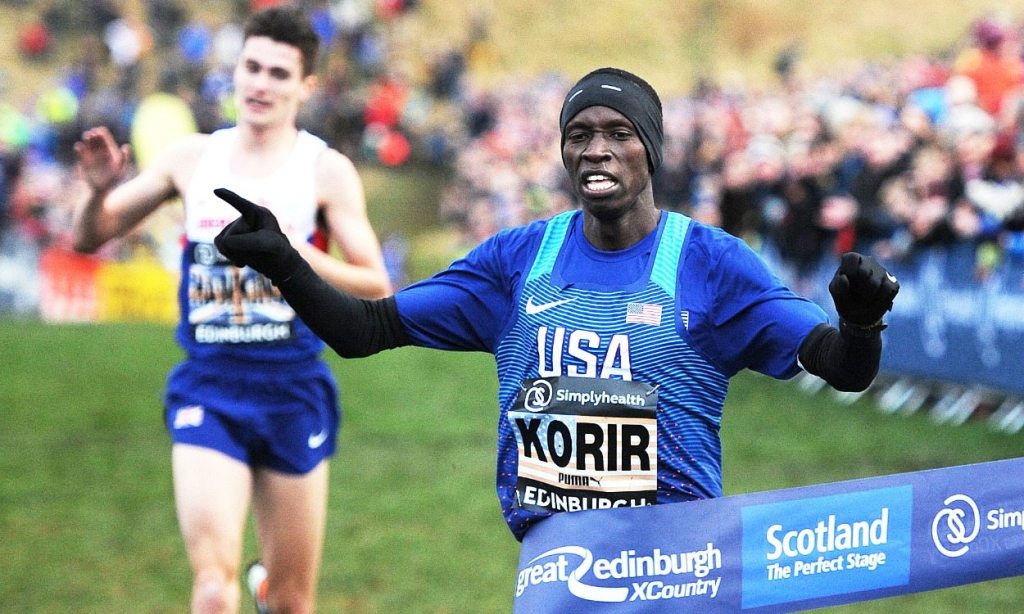
Korir – Moved to the US from Kenya about 10 years ago and ran NCAA track and XC for Iona. Ran a sub 2:08 debut in Amsterdam yesterday, fastest in American history. He’s on the upswing and has been strong on the track and roads the past few years with the Army team (WCAP). Likely to make the team in either marathon or 10000 m or both.

Fauble – 2:09 and top American (7th) at Boston this year. If Rupp doesn’t run Fauble has a real good chance at making the team. And even if Rupp does run, he’s been getting stronger each year and would battle the others for that 3rd spot.

Ward – 2nd best American at Boston (8th) and not far behind Fauble there. Ran on the 2016 team in Rio and was 6th overall in the Olympics. That’s a pretty good feat and shows he’s a gamer. He is also running NY in a couple weeks and that may or may not affect his training going into the Trials. Ward, like Fauble, is a strong favorite to make this team.

–we might almost be done here–could easily come down to these four, they are a notch above everyone else.

However, there are a number of exciting newcomers and later bloomers who could step in (and if history is any guide, it’s often someone that is off the radar a bit who steps up on the big day to make the Olympic team).

We’ll just jump in with the next three on the list: Riley, Mock, and Stinson. Jacob Riley at 31 is a journeyman runner running for Hanson’s with Desi et al. early on, and has had a number of injuries, including the same injury and surgery that Rupp is coming off. He ran a 3 minute PR last week in Chicago to place 9th and place as the top American. Jerrel Mock is just 24 and unsponsored. He ran at Colorado State and was an All American, but did not have a strong senior year and for the past year and half has been on his own. However, he’s been placing high at a number of big races, including USA 20K championships, Bix 7, and Utica Boilermaker. The 2:10 at Chicago will get him a sponsor. Parker Stinson has shown a lot of potential over the past few years, but his race tactics haven’t been great (going out fast and fading). But he’s now coached by Olympian Dathan Ritzenhein and has tempered his early pacing. He ran even splits to break 2:11 in Chicago.

And that brings us to two more competitors not on this list: Ritz himself and Chris Derrick, both high school and college running legends who have had injury plagued pro careers. Ritz has a 2:07 PR but that was some 7 years ago, and he’s now in his late 30s. So just getting to the start line is a big deal. They say talent doesn’t go away, but he’s a very long shot to even make the top 6 or 7 in Atlanta. Derrick showed much promise as a high school phenom and college All American at Stanford (running 27:20 for 10000) m. And he won the USA XC championships in 2015. But he’s hardly been healthy since, and broke his foot in a road race a few months ago. Making the starting line and placing in the top 15 would be a good day for Derrick who is still under 30.

Last but not least is the wily old man, Bernard Lagat. At 45 he ran a 2:12 marathon this summer in Australia for an American masters record. He’s won Olympic and world championship medals in mid-distances and has been a strong road runner. He’s had some controversy in the past but remains a popular presence on the circuit. A few months ago, he was actually considered as a contender. Not likely with the newer runners stepping up. But he IS Bernard Lagat and he could surprise us all by making yet another Olympic team.

Others to watch out for: Shadrack Kipkirchir, Korir’s teammate has a 27:07 10000 m PR. Should he line up in Atlanta, he’d have a good chance at making this team.

Favorites

Korir winning Edinburgh XC against World and Olympic 4th place marathoner, Callum Hawkins of Britain (Athletics Weekly)

  1. Korir, 2. Rupp, 3. Ward – 4th and 5th ready to take a spot if one of the early favorites does not run or lets up an inch: Fauble and Mock

Checking Back In

One post, 4 months ago, 0 comments 0 views. Starting slow.

I started slow as a runner, and it took me a few years to get my feet and a few more to do it with any consistency. And one of the things that helped me get there was learning to start out slowly and to work into a pace, not like a rabbit.

I’m not sure where to take this blog.

Being 2016 and an Olympic year, I thought it would be fun start blogging again, and to relive some things, while also thinking about the present and future of the sport (larger scale, and small scale how I relate). Been running for a long, long time, since the 1970s, still at it and I still enjoy racing although at lesser capacity compared to 30 years ago.

Let’s Jog! The 1960s

It has been well documented by other far more articulate sources on the obscure beginnings of the running movement. In my family our dad was the first runner, he took the Dr. Kenneth Cooper aerobics recommendations seriously, and in the 1960s he started to take the dog(s) out for a couple miles about three times a week. Dad was pretty athletic, loved to move and push himself, but he wasn’t built like your classic runner. More like a high school or JV college linebacker or small lineman. He wasn’t super quick, but he kept fit throughout his life, and he was very strong. Every run for Dad was a progression or tempo run. He’d start out at mid-7 min pace and do about 2 miles at that effort, and on his return, when he got a half mile from the house, he’d pick it up, so by the end he was running close to a sprint, head back and rolling bit, sweating profusely and breathing like a choo-choo train.

I tried running with him once, when I was about 8 or 9. I had no idea about pacing and took off at a dead sprint on the downhill street near our house. Dad sped up as well, and maybe he was even surprised. He didn’t say much. By the time we got to the bottom of the hill, a quarter mile from the house I was gassed. But kept jogging with him for a couple hundred yards, and he might have said something about not going so fast at first before he continued ahead. I was familiar with the route and walked more than jogged the dirt roads and a little bit of prairie trail over a broken down bridge made of railroad ties. One of my first bouts of exercise-induced-asthma.

In elementary school I dabbled with running in gym class, and had a knack for stealing bases in Little League for a couple of years. And about 5th grade I made some new friends who liked to sprint and jump at the all schools city track meet held every spring, so I worked hard to run the 50 yard dash and make a relay team. That spring I clocked a 7.2 for the 50 yard dash during gym (but that was a flyer because my next best time was 7.4 or 7.5), but I think my gym teacher might have given me a couple tenths, because no one ran more reps than me. But anyway, that went on the record for my Presidential Fitness test, and it was in the to 10% for my age and weight. I didn’t fare so well in the 600 yard run walk, and my time was well over 2 minutes. Maybe high 2:20s. So I wasn’t a distance runner.

After the school year we’d watch AAU meets on TV. And we’d see the likes of Jim Ryan, Jim Hines, or Wyomia Tyus run against the best in the USA and world and then we’d go to the track and try to emulate them.

Sixth grade all my track friends had moved on, I grew a bit, and got a little faster. Fast enough to make the “Baton Relay” the school’s A team. I was 4th man and the other guys were all faster (all three went on to be starting football players and track athletes in high school). I ran about 6.9, again on a flyer in gym, but was consistently 7.0 or 7.1 for the 50, and my 600 time improved a little to about 2:00 or 2:10.

Hello Darkness, The Early 1970s

By junior high we were into the 1970s, and track kind of fell off the radar.I stopped watching the summer meets on TV and my friends weren’t around to go to the track. The issues to follow more about Kent State and Vietnam, and Woodstock and Hendrix and the Rolling Stones. There were no track or running programs for kids in those days, and no distance running mentors that I knew of. You’d see high school and college runners from time to time, and the infrequent middle aged jogger like my dad.

I did give track a try as a 7th grader, but I hadn’t grown much taller from the previous year, under an inch. Still under 5 feet at 13, but I’d put on an extra 8 or 10 lbs. We didn’t do the 50 yard for the track team (but I did run about 6.8 for the 50 in the Presidential Test, and right around 2:00 for the 600 yard dash). As bigger kids, we did 100 yard dash, 220, and 440. I ran the 100, 220, and 4X100 relay, and pole vaulted. I avoided running workouts, like repeat 220s, and the longest I’d run would be about a half mile for the team warm up. Our team was very weak. We’d go against farm kids from outlying towns and they’d run circles around us.  I did score a couple points here and there in the field events and maybe a on relay or two.

By 8th grade we found out that our school was closing, and they cut out all sports except basketball. I played on the B team. By the end of the year, I’d grown an inch more but was still at 5 feet or a hair under. But I’d put on another 5 or 10 pounds after basketball. Maybe 5 foot and 100 to 105 pounds. My 50 time was about 6.7 or 6.8 again and I might have cracked 2:00 for the 600. I did continue pole vaulting a little. We nabbed a couple poles from our school, and did some backyard Olympics. That was until my friend Chris, a really good athlete, slipped out on his pole plant and shattered his arm.

I went to Europe that summer, and grew and inch, finally over 5 feet at the start of freshman year! But didn’t exercise much and put another few pounds. This would be the fattest year of my life. I was at a new school and hated it. It was much bigger than our old school, the students were just different–some very prim and proper, some pretty rough–and the administrators as well as a good portion of the teachers were mean. It was my year of hell, when I realized I wasn’t cut out to be a rock musician, nor cool enough to be friends with the up and coming Hendrix’s and Edgar Winter’s.

Nevertheless, I was inspired by the 1972 Olympics. The American breakout races by Frank Shorter and Dave Wottle, the fantastic 5K and 10K performances by Lasse Viren and the agonizing defeat of Jim Ryun in the 1500, but triumph by another Finn Pekka Vasala, and Kip Keino’s last appearance in the Olympics.

I did no organized sports that year, but a few times did get into some things that I shouldn’t have. Most of school was not interesting, but I did put in an effort in Spanish and science so I at least got Bs in those classes. In the spring we did the Presidential Fitness test again, and I ran about 6.6 for the 50 and somewhere 1:50 for the 600. By the time we finished the year, I so hated that place and my young life. My track friends were long gone, and I had parted ways with the rock and rollers.

But we did a little more pole vaulting, and I chipped in with a neighbor friend to buy an entry-level fiberglass vaulting pole from a sports supply catalog, and then built our own pit with a van load of foam rubber that was stuffed it all into oversized burlap bags.

I even jogged a few miles a few times that spring to improve my conditioning, and recall openly saying that I might even go out for cross country the next fall at my new high school. “Ha! You’re too fat!” blurted out my friend’s older brother. Shamed. I dropped the idea. I was 15 and 5’3″ and 115 pounds. And for the rest of the summer I was the short, undeveloped, fat kid.  Butt of more than a few jokes every week from friends who, looking back, weren’t much of friends at all.

At our first high school assembly, at yet even a larger school, the coaches tried to recruit more kids onto the cross country team, “Hey if you are going to compete in The Valley Conference [for other spots], you are going to have to be in shape!” My 600 times were pretty weak, I felt chunky, and I’d had asthma since the age of 5, so no.

The discomfort of the of the previous year’s schooling had worn off some by mid year. The new high school was much better than the one across town. But I wasn’t really mixing in with the students. Some had been friends in year’s past–even a couple old track friends from elementary who were a year older–but we no longer seemed to have much in common. Sophomore year was a stint in social purgatory.

Meanwhile, I was starting to deal with anxiety, something I had not experienced much of before.  Issues that resulted from some experiences on the European trip, combined with the bad decisions I had made freshman year, bubbled into bouts of tension and confusion and fear. I was afraid of new things and decided that I didn’t like to travel more than an hour or so away from home anymore. The thought of an overnighter out of state, or a cross country road trip sent me into days of panic. And I wouldn’t go. I skipped Christmas and spring break ski trips and stayed home.

In school, however, I turned the corner. That year I started studying more and doing better in all of my classes. All of my friends and acquaintances were planning college (none of the rock and rollers were headed that way), and while my parents had expected that of our family, my sibs were languishing and staying at home with no direction. I also started to grow a bit more, and lose a little bit of weight.

Winter of my sophomore year, I was 5’4″ and 108-110 pounds. I decided to go out for track. Being the smallest guy on the team I was pretty tentative and didn’t have much confidence in my running ability (not fast enough for sprints and not enough natural endurance to be a distance runner), so I stuck to field events and focused on the pole vault and long jump. The vault coach also coached middle distances and he encouraged me to try the 880 or mile. But my friends, or the ones I tried to hang with, were cool and they didn’t like the coach nor his son who vaulted and ran the 880. That, and I just didn’t like to run much. I did a few extra runs during spring break, but other than the team warm up half mile before practice  and short cool  down afterwards, I skipped out of interval or sprint sessions. Blatantly hiding out in the pole vault pit or skipping over to long jumping when the coaches asked the vaulters to do some repeat 220s.

I cleared about 9′ 6″ in practice and did 16′ 3″ in the long jump that year. But about mid-season, on the day that I’d had my best vault in practice, I hyperventilated or something and landed in the pit feeling like I’d guzzled a few beers or been doped with some drug. I was light headed, dizzy, numb feeling. And it didn’t go away in a few minutes, it lingered for hours. Basically, I didn’t know how to handle the adrenalin rush. So that odd experienced added to my anxiety. I made it through the season, but skipped a few meets, including the opportunity to jump in the conference meet for the sophomore squad. I just couldn’t bring myself to go to that meet and face the lightheadedness and internally induced disorientation.

I ended the season on a rainy Saturday hidden in my room, and not doing a much for the rest of the day, while my team traveled to a city a couple hours away and competed. The coach was nice, said nice things about all of us at the end of year awards, and while I didn’t earn a letter, I did get a set of “sophomore numerals” that could be put on a letter jacket or a bulletin board. They were pined to my wall with thumb tacks for years.

 Next: Young America, The Mid 1970s

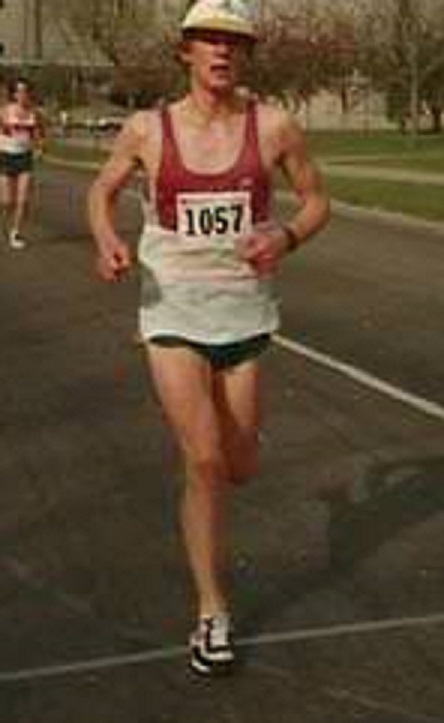
 Photo, all these years later running a 10 miler in the 2010s!
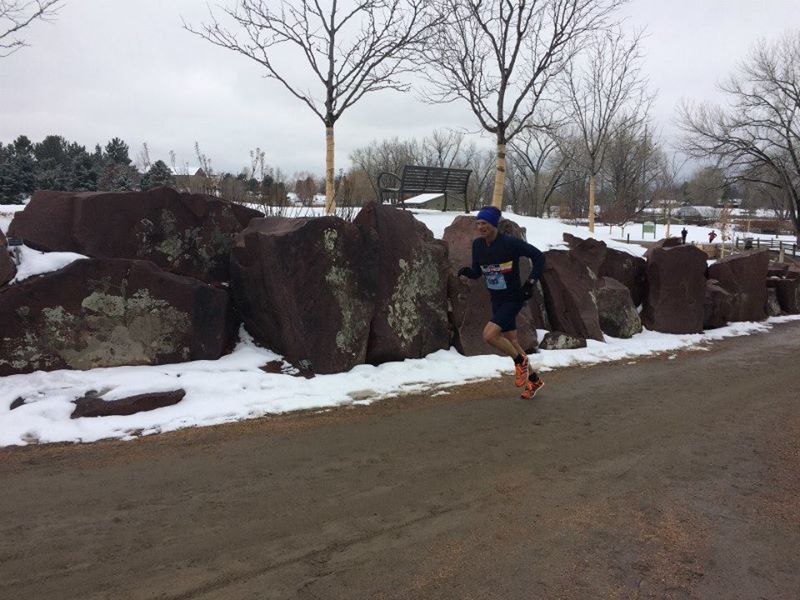
Snowman stampede finish