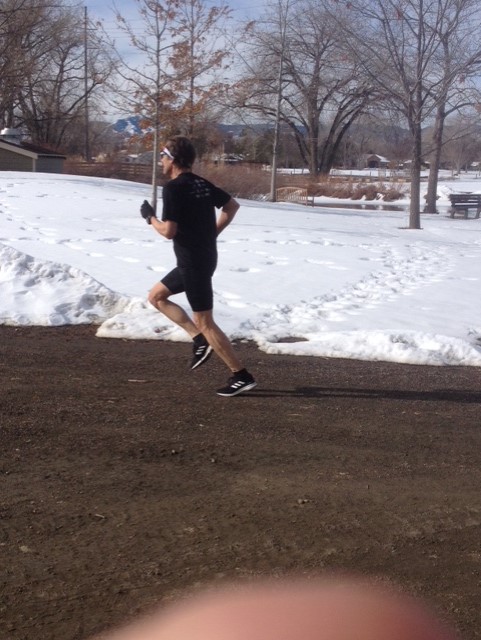
After nearly a year into a pandemic and six and a half months of writer’s block it may be time to put some things down again. I have been working from home for nine of those months, and have not had a lot of in-person social interaction outside of family, other than doing the essentials like going to the store. Hopefully, with new treatments and a vaccine in sight we’ll be winding down by next summer and this will be behind us.
At the time of my last posts in April we were all new to this and still trying to figure things out. However, back then there was hope that things would be better by mid-or late summer, although even then many knew the reality was that things would not approach normality until we get a vaccine.
So here we are. Probably in a worse state than in April, even here in Colorado which up until a few weeks ago had done fairly well.
Training
Back in April I was still in build-up and preseason training for time trials and virtual races. I ended up with two seasons of sorts. May to July 4 was the first, then took an easy few weeks, and have been running steady from mid-July through now.
My philosophy through all this has been not to take risks and to train at about 85-90% capacity both in volume and workout intensity. That aspect has worked and I have been very consistent. In the May-June block I ran 50-55 miles and got in a couple workouts a week. That started out well, but after a couple of race efforts in time trials I plateaued quickly, and by the end of June realized that I did not have enough base to continue racing.
So after a brief taper and recovery over the first week or so of July, I upped the miles to low 60s and cut back on workouts for about a month before resuming a routine of typically two workouts a week, while maintaining the mileage. Since the second week of July miles have ranged from 51-65 per week, with most weeks above 60. And I have consistently done CV and tempo workouts. It’s all been solid, but I haven’t pushing.
Racing
Although I am reasonably satisfied with the training, and think it’s about what I should be doing, racing has been less than satisfactory. I set out to run an age grade of 85% or more from the mile to half marathon. In the spring block I kicked off with a 15K solo time trial, and was reasonably happy with that; not quite reaching my goal of under an hour, but on a blustery day ran 1:00:40 at 5500′, with Tamara’s support and cheering.
Next up was a 10K on Memorial Day, part of a masters virtual series that we set up, and also as a virtual Bolder Boulder. I got really fired up for that event, even though practically no one else was in sight and ran 39:47 on a flat course at 5100′ north of Denver. So I reached my goal of a sub 40 at age 62, but a far cry from the low 38s on the tougher course in Boulder.
In June and into July I set my sights on the virtual mile with the Brooklyn Mile, and a virtual 5K over 4th of July as the second event in our three race series. Those were a wash. I picked a so-so course for the road mile and a lousy day with an 8 mph headwind for a third of the way and cross wind for the remainder, and could only muster a 5:33. Two days later I tried on the track but tanked at 800 meters and just ran in the last two laps, posting a 5:47.
The 5K a couple weeks later did not fare any better. I felt flat and ran 19:17, so far off the 17:28 at sea level last year, or 18:05 at altitude in the fall. So rather than fight it, went back to basics with the training.
Phase II went better. I ended up doing two in-person trail half marathons in Grand County (elevation 8500′-9100′ each) in August and September, another 10K for the virtual series (38:50, taking nearly a minute off the time from May), and two in-person 5Ks in Denver, with 18:56 and 18:47. The capstone was to be a 10 mile race in October which cropped up a few weeks earlier, and it was slated for a fast course in Loveland. However, we were struck with a blizzard that day and I decided not to make a risky drive to run in poor conditions there, and ran an impromptu half marathon time trial (after already putting in 5 miles that morning) in 1:28:30.
I have one more race on the schedule, another in-person 5K in Denver later this month, and hope knock off another 10 or 15 seconds off of the previous efforts.
Race Result Summary
So how’d I do with the age grade goal (all times at 5100′-5500′)?
Without a race season to look forward to and assess along the way a lot of us are looking back. I’m going to review 30 years past and 1,700 miles away (with tens of thousands of running miles and miles moved in between) to Ithaca, NY 1990.
I was in my second of three years working at Cornell University as a wildlife researcher, doing deer damage studies in people’s back yards on the hillsides near Cayuga Lake. This was one of my favorite jobs and Ithaca, was a great place to live.
That and I miss the 1990s.
We had a good running community, my wife Tamara and I were running with the High Noon Athletic Club, based on the Cornell campus. Our first year in Ithaca had gone well running-wise, and Tamara had dominated the Central New York running scene, by winning most of her races, setting records, and PRs almost every race. Her highlights of 1989 included winning the Empire State Games 5000 meters in 17:08 and placing 3rd at the TAC (The Athletics Congress, now USATF) New England cross country championships behind a couple of future Olympians. I will write about Tamara’s remarkable run in a future post.
My running also had gone well, although maybe more run of the mill (back then I was known as Tamara’s husband). I PRd in the 3000 m (8:54) and ran my fastest sea level 5K with a 15:34 on a very steamy morning (dew point 70s) to place 6th in that race.
The year did not end great, however, as my first job was stressful and I injured my back and shoulder from a fall while XC skiing in December. However, I switched jobs at the end of the year and got back into doing field work. I also had the entire winter to heal and rebuild a base through XC skiing and racing.
Spring – Inspired by a Legend
As usual I had a good cardiovascular base from the skiing, but had gained a few pounds over the winter. Tamara would tease me, saying that I ran like a duck due to all the skate technique training I had done over the winter, with only minimal running.
With just a few weeks of training under my belt, my debut that spring happened to be the Billy Mills Fun Run. With, yes, THE Billy Mills. It was on a chalk marked course on sidewalks, roads, and bike paths through the lands and agriculture part of the campus. I ran about 16:35 and was 3rd, a podium finish. At the awards I got to go up on stage and shake Billy’s hand–he asked what I ran and said that was a good time. The 1964 Gold Medalist gave a talk about his experiences growing up and at the Olympics and we watched his biographical movie Running Brave.
While I wasn’t super stoked about my time, a minute slower than the summer before, it was a inspirational start to the season. My running fitness got better with each workout. A couple weeks later I ran and won the Syracuse Mountain Goat road 3K (the accompanying 10 mile was much more prestigious) in a 9:10, and two weeks later ran 32:27 at the Lilac 10K in what was the last time this was a professional race. I placed 35th, while 10 runners went sub 30 that day. That was a deep field and was happy with that result.
Prepping for the Empire State Games
I was 32 years old, and 10 years out of college and somehow got the idea that I would return to the 3000 meter steeplechase, an event I hadn’t done since my final college track race. Now at the elite-professional level we frequently see steeplechasers competing into their 30s. However, it is not common for a middling post-college runner to return to the event on a whim a decade later. I did like the challenge, and it felt cool practicing the barriers. I had planned on running about a 9:50 for the qualifier and figured that would be an easy in to the Games, which would be in July-August.
I practiced hurdles and barriers every week for about six weeks and felt confident going into the race. However, I didn’t count on a Divsion I runner from the Southeast Conference returning to home to run a sub 9:20, and found myself battling it out for the other spot with two other runners. I held onto 2nd for most of the way, but got bogged down on the last water jump with dead legs and landed thigh deep i the water, slowing to a near standstill. Two competitors shot by and I came in 4th with a 10:03. It was a PR but a disappointment.
The next day I was was more discouraging. Landing in the water pit 7 times had caused a tear in my plantar fascia, and after a doing hilly 7 miler with friends I was hobbling.
Rehab and Revenge – Summer 1990
This was my first bout with PF, but I got a lot of good advice from Tamara and friends so I set out for a good stint of rehab, while coaching her over the summer as she easily qualified for the Empire State Games in the 5000 meters again.
We had a hot and muggy summer. I wore hiking boots every day at work because they offered good support for my foot, and I could walk pain free. For exercise, I swam a little and biked a lot. At first rather easy but as the weeks went on, I would go for 2 hours on the weekends and do speed/hill work and tempo (threshold) sessions during the week. I remember finding a big hill south of town and doing intervals, close to all out for 2-4 minutes a rep to simulate a tough 5K workout.
The cross training went quickly and by the end of July I could walk pain free in light shoes. So I started jogging. Just a few days after starting up my clubmates called and asked if I would run with them at the Manufacturers Hanover 3.5 mile corporate challenge in Syracuse. Umm. Okay. Maybe. With just a week or 10 days of running easy, I could handle 3.5 miles, but wasn’t so sure about the foot.
I felt surprisingly good that day and ran 17:59 for the 3.5 miles (5:08 per mile pace) and was 5th overall. Better yet, with four of the top eight finishers our scruffy band of university employees and grad students upended the heavily favored General Electric corporate team. They were so pissed off at us! They even tried to get us disqualified because they said the university was not a corporation. After an official review our status was kept and we were regional champions for the day and would get an all-expense trip to New York City for the championship in October.
The race effort did not set back the PF at all, and I kept running. My fitness came back quickly. A week later, I time trialed a 4:32 mile, closing in 2:12.
September – Enchanted Momentum
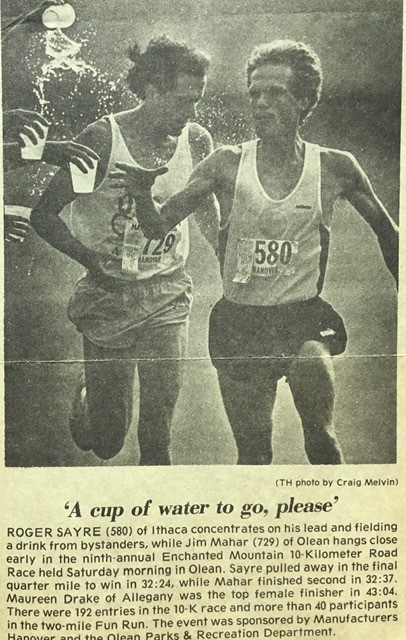
Those running two months were some of the best I had experienced. I was only putting in an hour or so a day of training (usually just 6 days), but everything just clicked. Over Labor Day weekend, we traveled to the southwest part of the state for the TAC regional 10K road championships for the Enchanted Mountain 10K in the town of Olean. The race had both individual and team categories–but that year no prize money so some of the faster runners were not there. Had a good duel with the local favorite and former champion, and eked out a win in 32:24 a season’s best. Our team won as well.
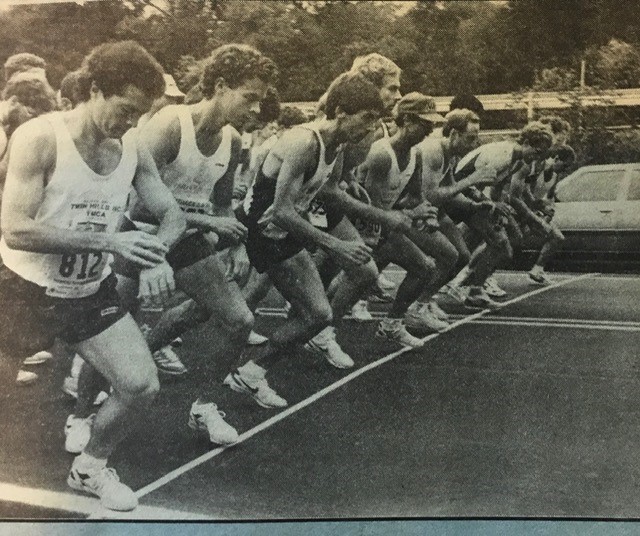
The following week I ran the 5 mile at the Ithaca 5 and 10 and took 2nd in 25:43, a personal best (still stands).
Start of the 5 mile race at the 1990 Ithaca 5 and 10. Left to to right: 1st can’t remember but from out of town; High Nooners Dan Peck, Scott Jones (winner of race), Tony Farquhar, Rick Hobeke, Doug Burdi, me (2nd).
We had some good workouts with club mates, and on the first weekend of October we were on the jet to New York City at a fancy hotel on 5th Avenue. I remember running by Trump Tower on our shakeout run. Blech then. BLECH now.
The corporate championship (now known as JP Morgan Corporate Chase) had teams that had qualifed at races from all over the country, plus hundreds of other teams from the city and NYC metropolitan region. More than 3,000 runners were in the race. It was a very competitive event, won by sub 4-minute miler Steve Ave (he played Tunisian Olympic silver medalist Mohamed Gammoudi in one of the Prefontaine films). Second place that day was 2:10 marathoner Pat Peterson, known for his somewhat awkward running style. I set out to run 5:00 per mile, and ended up just over that in 17:41 (5:03 pace) and about 40th place overall. Our team took 7th out of some 500 teams. GE sent their best runners on a coed team. The women were nice and cordial, the guys still hated us. It was all good.
Competitively, and time-wise those were the highlights of that year. However, next up would be cross country.
Cross Country
Following the flurry of races over a couple of months, coming off an injury no less, I backed off the intensity and just ran for a couple weeks. Seeing how I wasn’t logging a lot of miles (+/- 50 a week) I didn’t see a need cut back on volume. That year, Pete Glavin a former Rutgers runner from Rochester created the Upstate New York Cross Country Series. It still exists as the Pete Glavin Cross Country Series. Pete had so much enthusiasm and put together five or six races a year for post-college runners in the region. We’d get between 50 and 70 runners per race, and Pete and his family would sign us up and oriented on the course, and he’d jump in usually placing in the top 3 or 4. We lost Pete to brain cancer some years ago and miss him. Tamara and I still talk about him every fall.
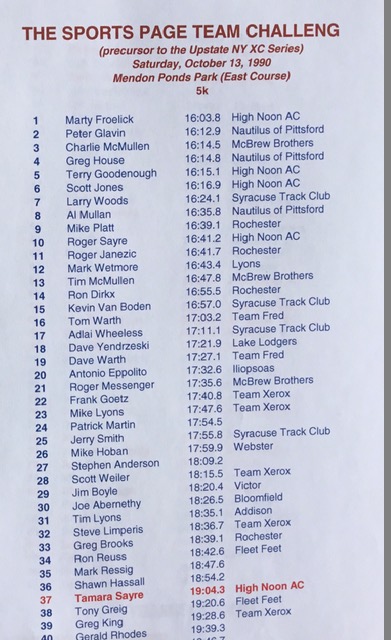
So I missed the couple of races of the first year of the series, but did all remaining races in 1990 and 1991. I think I ran four of the races in 1990, all in the Rochester area. We had a great (dominating) team and I don’t think I was better than 4th on our team.
Results from the Upstate NY XC series–check place numbers 10 and 12! Can’t remember if Wetmore had the pony tail or not, but think I outkicked him in the stretch.
We had four guys who had run low or sub 14s in college, and three of them were still running mid-14s at the time. Marty Froelich, Scott Jones, Mike Bunsey, Terry Goodenough, and Karl Staven. Plus we had a half a dozen other very solid runners from the club showing up, often enough to field an A and B team.
November – The Intensity Catches up
At the series championship in mid-November I was barely hanging on to my early season fitness. With moderate miles, weekly training sessions at 5K pace (repeat 800s to miles) plus tempo runs, and racing almost every other week since August I could tell my body was getting tired. I remember that last race, I think it was a 6K at Cobbs Hill Park in Rochester I faded a bit over the stretch. Phew! Both men’s and women’s teams won the championship, and Tamara won her first series title. What a great way to wrap up the season.
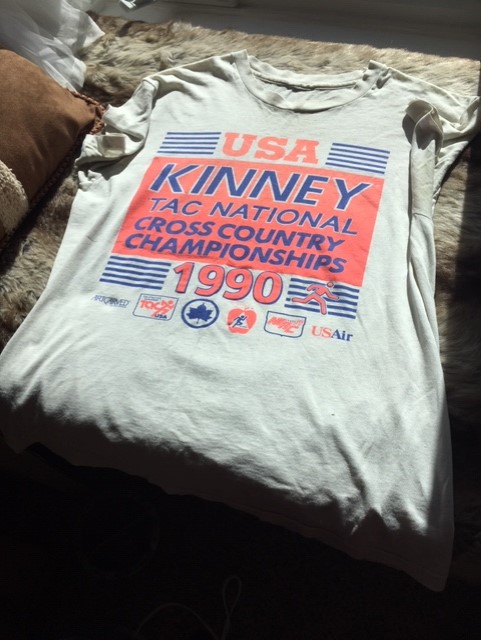
One more race, though. The TAC (The Athletics Congress, now USATF) National Cross Country Championships that year would be at the fabled Van Cortland Park in New York City. If there ever was a bucket list race that was it. I tried to talk the other guys from our team to enter, but they’d had enough for the season. So Tamara and I traveled to northern New Jersey, where we stayed with my aunt and Uncle and cousins, whom I rarely got to see.
Although I caught a cold a few days before and didn’t have a great race, just being there made it a great outing. While stretching and getting my spikes on just before the race, future two time Olympic marathoner Bob Kempainen plopped down next to me and did the same. Kempainen would beat 8 time champion Pat Porter that day, ending one of the greatest streaks in USA distance running history. I was about 5 minutes back, somewhere in the third quartile. However, running at Van Cortland with all the buzz along with the cool breeze was a thrill that I shall not forget.
That’s how 1990 ended. Even with the mid-summer injury, I probably raced 20 or 25 times. Didn’t rack up a lot of miles, but did get a couple PRs, a regional championship, and a five race cross country season. If all of this were today, I would probably approach the training and racing differently, but for back then it was all good.
Postscript – Times Were Changing
Professional road racing and big-time road races were still new, and in 1990 we were barely a decade into the running boom. Looking back, things changed quickly in the early 1990s. Early corporate sponsors pulled back and prize money races became less frequent. The 10K was still a prestigious race and often considered to be key race in anyone’s racing year, not an afterthought or stepping stone race from 5K to half or full marathon. Americans were still competitive on the world scene and dominant at domestic road races. It was a time of gaudy neon colors in gear. Chartreuse. Fuschia. Hot Pink. Florescent green or orange. The women runners either had big hair or a boy cut, hardly any of the now ubiquitous ponytail. Men sported mullets–okay that wasn’t such a great thing–or the shaggy look. Races often supported charities, but they were not managed by corporations. However, most importantly, the older we got, the faster we were! (battle cry of the aging road warrior in the late 1990s and early 2000s).
I think most of us got caught flat-footed on this one. Some public health officials and epidemiologists saw this coming back in January but that was far away for most us. I remember the SARs and MERs epidemics in the early 2000s, and those were in distant lands. Probably contracted H1N1 in 2009 (doctors just said stay at home and ride it out), and was in bed for 3 days with that one.
The closure of the world indoor championships in China was the the first sign for runners and track fans this winter, but that made sense because the venue in Nanjing was just a few hours from Wuhan, the epicenter. Like the virus itself, the events just seemed to unravel gradually at first with outbreaks in far away lands. I thought this would be like SARs, severe, but regionally limited.
Back home, I think the US Olympic Trials on Leap Day was the highlight of the running world for the USA in 2020, and who knows maybe one of the worldwide highlights for the entire year. While everyone was talking about a possibly canceled or postponed Olympics, it was just speculation. The Olympics are just too big to shut down. Right? That now seems like a year ago, not just six weeks!
Within the first two weeks of March the reality became apparent. However, looking back now, mid-March was probably several weeks too late to implement widespread social distancing measures. All politics aside, most of us did not comprehend the gravity of the situation until the virus was on our doorsteps and into our homes and hospitals.
For those who are ill, I just wish a swift and safe recovery, although I know that will not be the case for many thousands. For those deeply economically affected, let’s just hope that this a blip for a couple of months and by summer we can start putting everything back together, while developing a vaccine or treatment in time before another wave hits.
Training
The last time I talked about training was back in February, and I was just making inroads on the build-up, getting to four or five days of running a week at 4-5 miles a pop. On my birthday in late February, I did a 5K to test baseline fitness. Up to that point I had only run three 20+ mile weeks, and had not done any real workouts. I eked out a sub 20 (believe a personal worst by 45 seconds or so) and felt gassed but otherwise pretty decent. No pain. Huge gain!
Since then I’ve managed to build gradually, adding just a couple miles a week. Now with four consecutive 40+ mile weeks it feels like I’m starting to establish a base, and now feel ready to bump that up to 50 miles.
In March I also started adding in some light workouts, starting out with short sets of hill reps (like 5X 30 seconds was my first effort) and adding a little each week (did 4X 2 minutes during the last week of the month). I also have done a bit of tempo running and fartlek to build some endurance and speed. Like the weekly mileage, long runs have increased only incrementally, with 1:04 on the morning of the Olympic Trials marathon, to 1:33 yesterday. Saturday’s run was pretty solid, averaging under 7:50 over the last 8.5 miles while covering some moderately hilly terrain at 5,600′ elevation.
So to tell the truth, while still lacking a full “base” I do have a solid foundation and can build on that.
Stepping Forward: Running Strong in a Pandemic
Each of us will have our own approach over the next few months. I have seen some friends cut their work by 50% because they want to make sure their immunity is up. Others are setting weekly mileage PRs, while chasing Strava segments, and running weekly time trials or virtual challenges.
Most of us are somewhere in-between. In those early days (less than a month ago) there were a bunch of online articles and podcasts advising that training hard can lead to lowered immunity, not something you want to incur during a pandemic. Some of this is theoretical and the science is not conclusive, but for 25 or 30 years (with XC skiing in particular), coaches and physiologists have been saying that your immune system drops for several hours after a hard effort of longer duration (say 2-3 hours). In addition, stacking several consecutive weeks of high-level training can also undermine your immunity.
So I think some common sense should prevail and for most of us this can be a good time to get back to basics with maintenance training that includes some quality and endurance but not so much that we are pushing our physiological limits. Plus with health care systems potentially stressed (especially in those parts of the country with high infection rates), this is not a good time to court an injury.
So for the meantime, I’m planning to stick to under 80% of my maximum and average levels of training, compared to recent years (these were at about 75 miles a week maximum, 60 miles a week on average). When things open up–and they will–I should be able to jump back into a full training load within a month or month and a half.
Now is a good time to run for health and joy–and maybe work on a few things that are weak spots. For me I just like getting out on the trails and open space (often early before things get crowded with runners, cyclists, and walkers) is the highlight of my day. However, I have really lost my sprint/middle distance gears over the past decade. A 20 second 100 m feels quite fast now, and holding that for 800 m or a full mile seems exceptionally daunting. So this summer I’m going to work on that 400 m to mile speed, maybe for 6-8 weeks depending on when or if things open up for racing. In runner-speak, for health and ‘economy’ just like the rest of the world.
The other day I recapped my experience in the World Masters 8K cross country event. Here is the follow-up. Five days later I ran the half marathon. The pictures here will tell that story. The day was perfect for a half marathon, about 50 degrees, a slight breeze, and hazy to partly cloudy at the start, mostly sunny when we were finishing.
A year ago this week I was in Torun, Poland for the World Masters Athletics (WMA) championships. And while I’ve done write-ups on some forums and put up pictures on Instagram and Facebook, this the first time here. With everything else shut down for who knows how long (June or July maybe for racing), this might be a good time for some reflection and a few photos.
Background: Getting There
I entered 2019 with a plan and the championships were not part of that. It just seemed too far to travel and too much time. However, in late January final calls for entries piled into my email in-box and I gave it some thought. The best selling point USA Track and Field Masters advertised that if you had a top 6 world ranking at any distance in 2018 they could help subsidize your trip, and if you won medals in Torun they’d throw in some more. So I took the bait, sent out a couple of emails and a day later had a plane ticket and new plan.
The trip itself was long, some 28 hours from take off in Denver to getting to my hotel (a dorm at a Catholic college), but all went well. Had a few days to adjust to the time and environment, and I took in the opening ceremonies and first day of competition on their world class indoor arena.
Ready, Set!
I would be running “non-stadia” (outside) events and entered the 8K XC, 10K road race, and half marathon, with the plan of doing two of those three. First up, on Monday was the 8K XC. I don’t recall much about getting ready, other than being excited but not overly so. Looking at seed times (roads) I figured a top 5 was a reasonable goal, but had no idea how that would really play out. One thing I do recall is listening to Led Zeppelin’s Battle of Evermore on my iPad moments before heading out the door and catching the bus to the venue.
It was a cool and blustery morning with temperatures in the high 30s F and a good breeze. Some rain kicked in during my warm up, but that let up about a half hour before we were to line up. The course was a winding 2K loop through a wooded park adjacent to the stadium. Each lap featured about a dozen sharp turns and three notable hills. And two of those had 30 meter sand traps that you had to run through or skirt the side on narrow but bumpy moss-covered earth.
Go!
The pictures here tell most of the story. About 35 of us lined up. The course narrowed two two wide after only some 50 meters. I got bumped back to about 10th place for about a half kilometer before we opened up on a flat stretch by a fitness park, with room to pass. By the time I got through in about 5th or 6th place, the two leaders had broken out a good 20 meters ahead. And their lead would grow through the lap. I could only bide my time in 5th place (2nd photo, on the top) and didn’t want to sprint to catch them.
At the end of the lap I caught the Polish runner and passed him, still a good 40 meters back from the leaders. But come back they did! By half way through the second lap I had regained contact and the race for the medals was on.
Both Tommy, from Ireland, and Jukka, from Finland were strong and wily cross country runners, throwing in surges and taking the corners and hills with skill. I hung behind them most of the next lap, but tried to take the lead by the fitness equipment. Only was able to hold on momentarily. A half kilometer later (5.5K into the race) Jukka just took off on a rooted downhill, and Tommy and I could not match that pace on the rough terrain. So it was now a race for Silver and Bronze.
Back and forth we went. Tommy throwing in several surges and getting a gap. Somehow, I’d fight my way back. And we’d do it again. On the last lap I put in my own surge or two but could not drop him. On the last steep hill with the sand trap, he went right. I went left and stepped into to the middle of the sand, a foot or more deep. Lost my momentum and he had 5 seconds on me by the time we crested. That was enough to hold me off. But what a race! I was thrilled to get a Bronze medal, and made some friends in the process.
Hey sorry, was going to keep the content rolling a couple weeks ago, what with so much excitement following the Olympic Trials marathon, close of the indoor season, and thinking about outdoors, training philosophy, and some fillers on my own comeback trail.
But then covid-19, simmering for a couple months here in the States, exploded on us all and turned our lives upside down.
So I’m working from home, semi-shelter in place, not getting out much other than to shop for food and get out for a run. I figured they’d keep Nordic skiing going because it’s an ideal social distancing activity, because you can’t get closer than about 6 feet from other skiers. But all the centers closed and grooming has all but stopped. We made an attempt last weekend but it was mission fail with track skis on fresh snow.
The other week I wrote some on returning to form following an injury setback. I’m about half way back in terms of volume, maybe 90% if you go by fitness (which I’ll term ability to cover a given distance from say 5 minutes to an hour at an appropriate race or workout pace). Getting there but not yet back.
Today I’ll just mull over some more numbers, thoughts, and approaches to this build-up. First though, I’m pain free, and not even any residual stiffness after a run or next day. I’ll attribute that big step to physical therapy (PT) and time. I’m spending about an hour a week at core and glute-strengthening PT and it is really working.
On Time Over Distance
We runners get so caught up in tallying numbers, in particular miles per day or week. That can be good or bad, or just insidious. When I’m at lower volume, and building-up, I prefer to go by time. I tried my build-up in December, and was thinking ahead to miles per week for January, even entertaining some racing in the middle or late part of that month. However, I probably jumped up too quickly, and that resulted in a setback in which I had to take another week off completely and start over again. And start PT. So I lost about a month in the short term, long term hope to be better off.
Going back to the first of the year here is a summary of my running build-up. In minutes:
13
1:04
1:51
2:12
2:35
2:49
3:16
3:52
4:10
It doesn’t look as cool as miles, but by increasing my volume by about 5 minutes per day of running each week I’ve managed to temper my build-up and give some time for my body to re-adapt to the training. I feel good and will continue this for a couple more weeks, and then I’ll get back to counting miles and minutes.
My Current Approach
I started out at running three days a week, and transitioned to five days by mid-January. This week is my first step back to six days. Before the injury I had been doing just one day off every two or sometimes three weeks. We’ll see where I go from here, but I’m thinking by summer I’ll be back to 10 days on one day off, with a three week microcycle. But that’s getting ahead.
For the first seven weeks I just ran easy and fairly short (20-40 minutes). Once I got over that, I have added a little bit at tempo effort. Two weeks back I did 15 minutes at what felt like threshold, and last week I did 18 minutes, with these workouts with the 5K test effort on my birthday. And last week I introduced a very short hill session of 5X 30 sec on a 7% grade. This week it was 5X 45 seconds on the same hill. I’ll do a fartlek on the weekend and another hill session on next week. By then I’ll be at about 5 hours of running and ready to think some about miles, and adding more miles.
Next Month and Beyond
I have a big (championship) 10K at the end of April. I don’t have great hopes of cruising through that easily but definitely want to represent and mostly help our team out. Coronavirus and any travel restrictions aside.
By then I hope to be at 7-8 hours a week (50s/week) with two workouts and a longer run (1:30 to 1:50) every week, and I’ll keep it at 6 days a week until summer.
Leading into summer I have Bolder Boulder, and that’s always a big target for anyone here. And I have some good stuff in store for summer, like World Masters in Toronto, but haven’t committed to anything yet. If all goes well, should be rolling pretty well by then.
Well we didn’t see a lot of of that coming, with most of the women’s like top four or five in many people’s predictions not finishing or finishing far back (Hall, Sisson, Huddle, Hasay). However, Tiliamuk and Kipyego were up there in the top six or eight predictions, so their rise to the podium were less surprising consider the favorites had an off day, or were not able to withstand the relentless hills and wind last weekend. Now Molly Seidel WAS a huge surprise. Very talented (with a bunch of NCAA titles) but oft injured and has had some other issues with an eating disorder and fallout from that. Plus it was her first marathon, after qualifying with stellar 1:10 half bare a month ahead of the Trials. I didn’t have her in a top 10 list and figured 12th to 15th in a 2:32 on that course would have been a very good debut. So kudos to the women!
As for the men, likewise three of the top four of most our favorites did not make the team, although Leonard Korir was an agonizingly close fourth. When Rupp returned to form with 1:01 half marathon last month, which was presumed to be a training effort, he was back on as a podium favorite. The only thing surprising there was how easily he did it, or made it look–I’m sure it wasn’t easy. The downfall of Ward (26th) and Fauble (12th) were a surprise. Looks like they (Ward in particular) just had off days. Fauble’s 2:12 was close to what we’d expect on that course last Saturday, it’s just that all those 2:10s and 2:11s ahead of him were not expected from most of those athletes. Abdi got the men’s surprise of the day, at 43 years old. I saw his name mentioned a couple times but not frequently, but like many others thought Lagat would be the masters breakout runner. I did have Jake Riley in the mix of one who could make it, based on his 2:10 performance at Chicago last fall, and knowing that he was on the upswing.
That was a great event weekend, and one we’ll be talking about for years.
Nearly 700 men and women will line up tomorrow for the Olympic Trials Marathon. I can’t think of a year with this much interest–going beyond just a few thousand runner geeks scattered across the continent, this has nearly gone mainstream. I think with the stacked shoes, the large field, Atlanta’s push to make this the biggest and best ever, and some very compelling races up front.
About the shoes
wow, Nike is offering free Alphaflys to anyone who wants them. Wonder if anyone will chuck their sponsorship in favor of a possible better time to wear the shoes. If I were a 2:12-14 guy, or 2:28-32 woman and was on a modest sponsorship or unsponsored, and didn’t have an alternative, yeah I’d think about it. Nevertheless, Hoka, Saucony, Adidas (maybe) and Brooks at least will have their new shoes or prototypes out there on the course. If it’s a Nike sweep and some from down in the depth charts make it, I’ll go bleeghhh! Looking closely because in 2020 I’ll likely get a stacked shoe for my own masters plodding.
On the large field
It’s partly the shoes (see above) but also just a lot of interest and prestige in getting a Trials standard and the opportunity to line up with current and future legends in an all-American event. I do think they’ll have to adjust the standards. Have been hearing arguments saying they should go the other way, lessen the men’s standard to 2:20 or 2:25, and women’s back to 2:48 or 2:50 and make it an even bigger event. But I disagree with that. If they do that it becomes more of a high-end citizens race, and it would be fairly crowded and not really simulate the Olympics.
What are the Olympics? It’s about having the best in the world line up and have a go at it. And the Trials should be relatively close to the expected conditions (including course and weather) and having a limited field on a special day does that. So if I had a choice I’d keep it at approximately 100 men and women qualifying for their respective races. Right now that would be about sub 2:17 and 2:38. Those are good, near-elite (I think better than “sub-elite). However, in non-Olympic years USATF should host a more open US championship (Not tied in with a mass race, but stand alone championship), with qualifying times in the 2:20-25 range for men and 2:45-2:50 for women. That would give incentive for sub elite runners to keep going every year, not just once every four years, and it would be an exciting annual event for three years, culminating with Olympic Trials on the fourth year.
The courses for the US Championships should be fast and races run in good conditions (or as good as possible). That way more athletes would have a chance to attain the now very stringent standards. Meanwhile, the Trials should simulate expected conditions at the Olympics.
Atlanta Running City USA
I think the moniker from Atlanta Track Club is a bit pretentious but they’re doing a wonderful job at building these trials up, and you have to hand it to them. I expect the races on Saturday will be fantastic and that credit goes to ATC and all their hard work.
About the races
I wrote up some a few months here are my picks and darkhorses.
Women: Emily Sisson, Sarah Hall, Kellyn Taylor — but any one of a dozen runners (Linden, Hasay, Huddle, Tilliamuck, Kipyego, Rojas, Flanagan, Theatt among the more notable) will be in there.
Men: Jared Ward, Leonard Korir, Galen Rupp, Scott Fauble. I’ll keep Fauble in there a co-favorite to make the team should Rupp or Korir falter. Likewise there is a dozen or more other men who could contend if they have a great day or if their shoes are working extra well. I think someone off the radar will bust into a top 5.
Shoutout to some friends
I know or have met a bunch of qualifiers so have a good race Megan, Evan, Sarah, Tony, Laura, Lindsay. Hope you all have good races and a great experience in Atlanta.
Over the past few months I have chronicled my injury, with some sad posts, hopeful, and maybe a bit frustrated. Here’s a happy one. I have built up gradually in 2020, starting with just 1.5 miles on the first week of the year to 28 miles ending last week. However, rather than counting miles I have been going by minutes, and that has helped me hold back. So last month it was five days a week for 20-25 minutes a run, and now at the end of this month I have built to 40-50 minutes–with a big jump to 62 minutes on my birthday last week.
In that run I managed to score a personal worst for a 5K race, with a 19:50. Nevertheless, it was a good run. The plan was to go 6:30, 6:20, 6:10 but I did quite the opposite. The first kilometer (downhill) was probably closer to 6:10 pace, but once I got onto the bike path I settled more into 6:20s pace, hanging into the top 10 or 12 (half of them women). It felt good, like a tempo, with a heretofore 23 mile peak week I figured this would not be sustainable for a 5K, and I was right.
6:19 first mile.
The second mile was just a matter of pacing and finding that rhythm. At the turn around on the bike path I felt my stomach coming up. Not great.
12:47 at 2 mile
I surged some after about 2.2 miles but could not hold more than 20 or 30 seconds, and it was much of a surge. With 600 to go we had a 200 m hill, nothing huge but it wasn’t pleasant feeling.
19:15 at 3 mile and ambled into the finish.
That’s probably 40 seconds slower than my slowest (and those were slightly long courses), but I crossed and cooled down pain free. Awesome.
And now I have a baseline from which to work. After this week I’ll also start building by miles (about 5 mile increments every two weeks to start), and go from there.