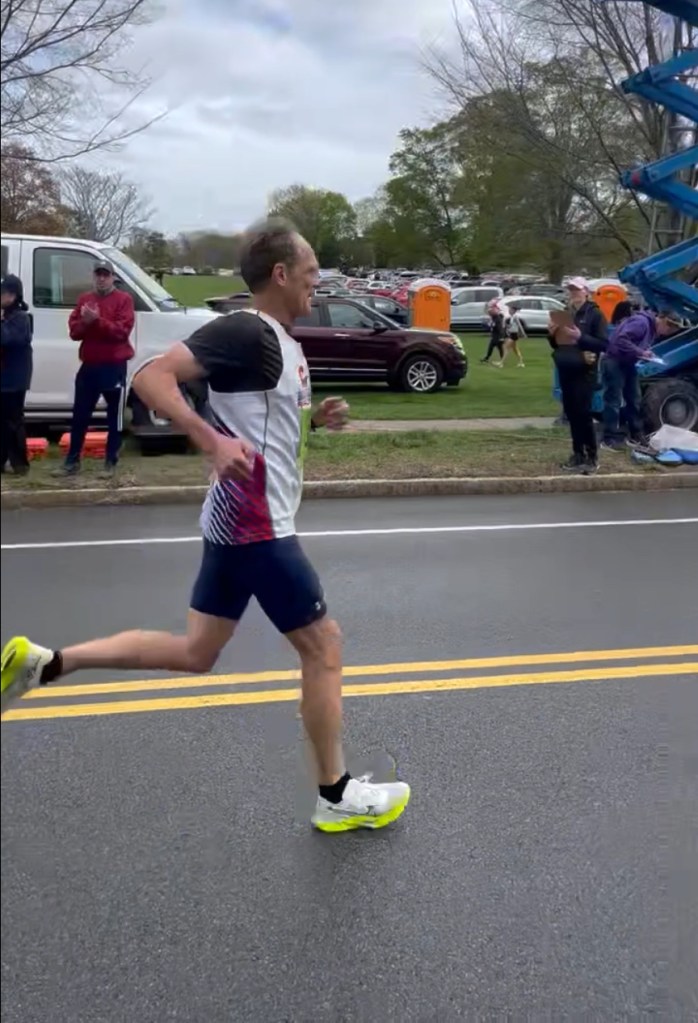
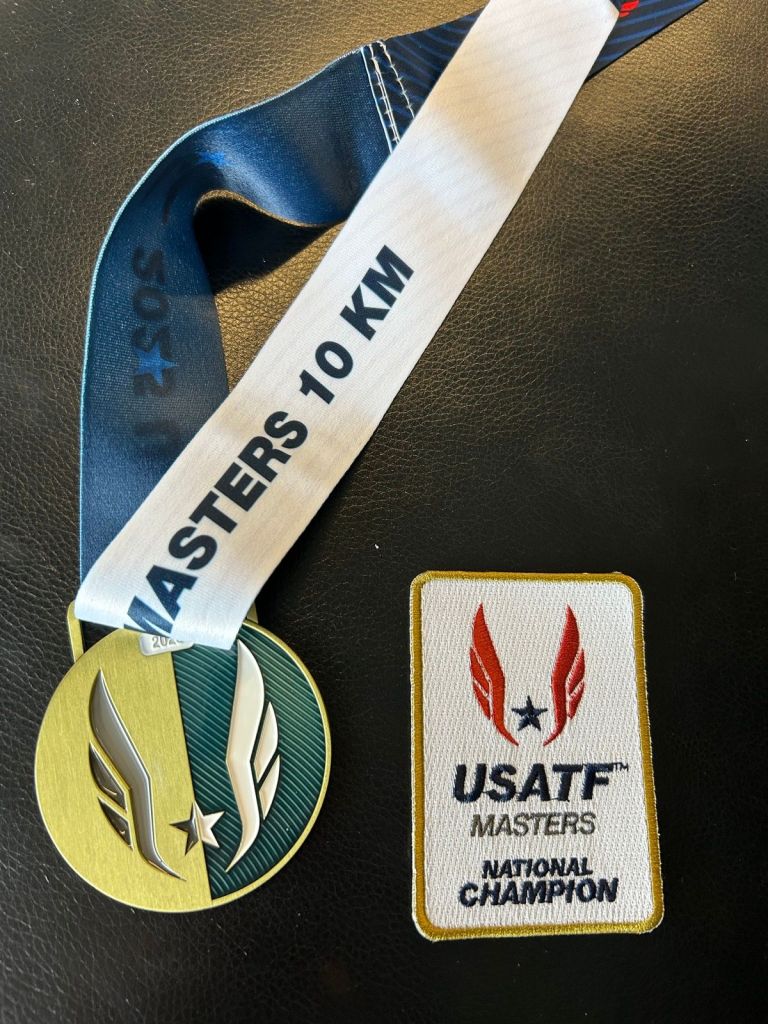
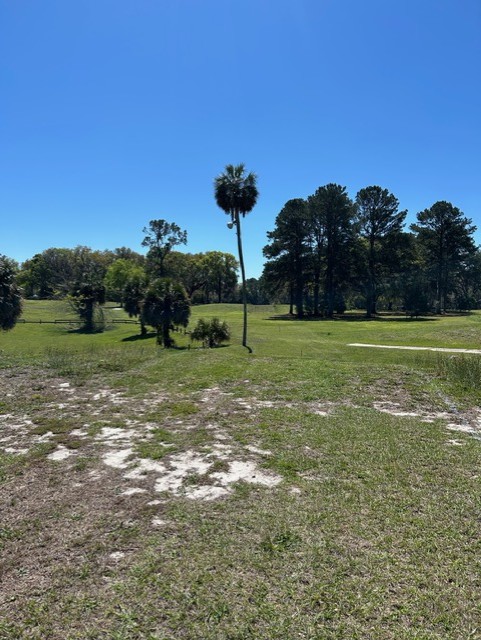
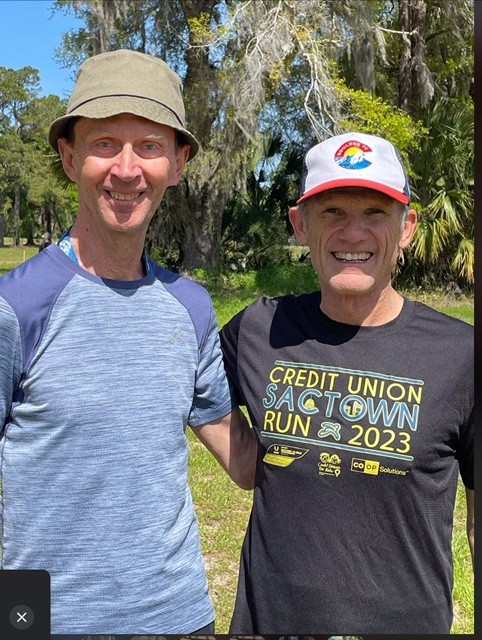
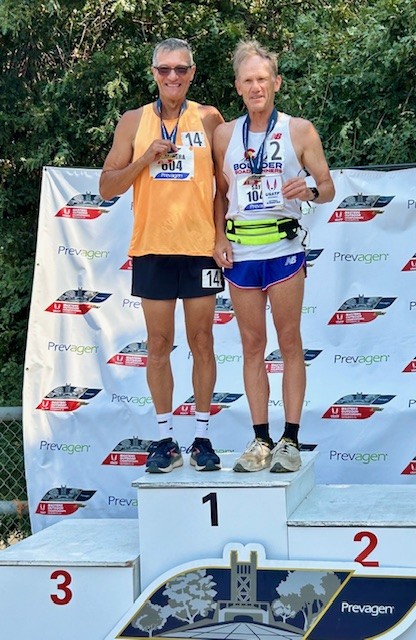
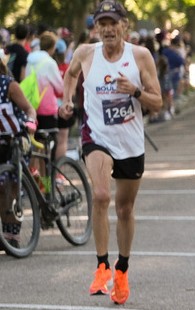
I first did this race in 2022, more than 40 years after thinking that I had to run it someday. Getting to Spokane and running the race was a huge bucket list race event for me. We liked it so much we thought about moving to Spokane, and by 2024 those thoughts became a plan.
We planned the Bloomsday weekend back in January, thinking that this would be a pre-move scouting trip, or we would already have a bid on a house by then. However, things changed, and that was discussed in last week’s post and we decided not to move to Spokane after all.
Despite that, I still wanted to make the trip and run the race in 2025. Although I have only raced to it twice now, the Bloomsday 12K is one of my favorites.
Quick Turn-Around From The 10K
I only had a week to recover from the USATF Masters 10K, which was on the East Coast. In-between the travel and these races we had to move out of our condo on Wednesday, with closing on Thursday before Bloomsday. Not to mention flying out Friday night. The week was a bit of a blur. I had couple of easy running days, but put in 21,000 steps on a 14-hour moving day. The last three days of the week were just easy runs with a few strides thrown in.
Returning to Spokane after thinking-expecting to move there this year was a bits strange. Let’s just call it bittersweet.
On Saturday morning I ran about 4 miles along the course, including the top half of Doomsday Hill, and we drove around the town some after bib pick up. Otherwise, we took a restful day which was nice after such a busy week.
Doomsday Hill
Doomsday Hill a 5% climb over a half mile in the background.
Race Day
Race day dawned rather cool, at 39 degrees. We made our way downtown early to ensure that we had good parking (that wasn’t a problem) and waited in the car for 40 minutes before making our way to the Riverfront Park area and race hub.
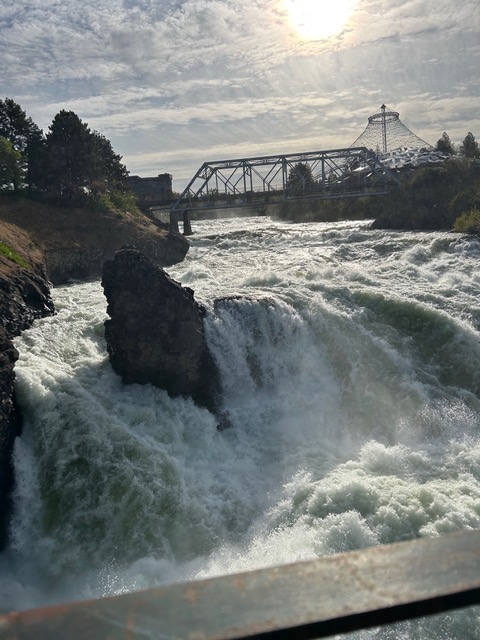
Took some pictures of the falls, but just doing that was chilling so we found a coffee shop and warmed up there until I was ready to start my jog.
I got in just 2K for a warm up, dropped off my bag and lined up in the second seed wave, about 30 meters behind the elite runners. It had warmed up significantly, to about 48 degrees with just a slight breeze. These were perfect race conditions.
The first half mile or so of this race is a little sketchy compared to other big races. There are several slight turns with curb jumps and the streets are narrow in spots. Plus, there are potholes. However, I managed to avoid any mishaps.
The plan was to run the first two miles a little slower than goal pace, which was about 47:00 (6:18/mile). My secondary goal was to break my time of 47:32 from 2022.
The first mile is relatively flat and the second mile has a half mile descent (dropping 140 feet) and sharp uphill. My splits were 6:18 and 6:18. Just a few seconds faster than I had planned but it seemed within reason, my breathing was good and I felt in control.
Mile 3 had another big uphill and it was a net climb of about 80 feet, so my split was a bit slower at 6:34 (but the grade adjusted pace was another 6:18). Through mile 3 my effort was fairly even and I felt good. So I pushed it some in mile 4. Maybe that was my mistake. With a drop of about 30 feet I ran about 6:08, my fastest split of the day. At this point I was ahead of my 2022 time and I was feeling good about that as we crossed the Meenach Bridge over the Spokane River. This, the low point of the course at 1740 feet, would be the highlight of my race.
Onto Pettit Drive and the start of Doomsday Hill, I eased up a little and let the pack just ahead pull away from me. I figured I could make up some time once we summited (which I knew was nearly a mile ahead). The course climbs over 100 feet in that initial half mile, at a grade of 4-5 percent. Just get through that part I thought, and I could grind out a good finish. My 5 mile split was 32:00, almost exactly what it was in 2022.
Course profile and pace, along with some stats.
Although I had run up the steep part of the hill, the run out was another half mile at about 1% incline. Small but I was just zapped at this point, and I ran a 6:30 for the 6th mile. Fortunately, I regrouped by 10K and got my rhythm back, knowing that it would be a net downhill to the finish. This stretch along Broadway is more than a mile long with no turns. However, it’s easy going and there were some crowds along the way cheering us on. That mile was a 6:20, again a little slower than 2022. We made the turn on to Monroe and I threw all I could into it for a strong finish in 47:42. Short of my goals, but I’m still happy with the effort and to take home another age group win.
I’ll reiterate that this is one of my favorite races. It’s huge, with 30,000 runners, but everything is well managed. They have an exciting elite race up front and those in the mid pack and back are out there on a Sunday morning having some fun running or walking with friends and family on the scenic yet challenging course.
We did not move to Spokane in 2025, but I will return for this race!
“Think you’re escaping and run into yourself. Longest way round is the shortest way home.”
I took a long trip away to run the James Joyce Ramble, and then we sold our home. It was that kind of week.
We planned to sell our place in the Rocky Mountain foothills this year, or at least look into making a move, but I envisioned that we’d close the deal during the summer. Or maybe we’d make the move next year. However, events took a life of their own as soon as we returned from a weeklong trip to Spokane, WA where we were planning to move.
Life sometimes throws curves at you. Two factors changed our destination. We bought our mountain condo in 2016, and all seemed pretty good, but the monthly homeowners association fees increased 10-15% a year and by 2024 it had doubled, while the services and quality of maintenance at the site declined. In a few more years the fees would be greater than our mortgage, and that would be financially unsustainable for us. Not to mention the value of our property would decline. At the beginning of this year we decided that moving out in 2025 would be better than 2026. That would mean having the condo on the market by spring.
Things accelerated from there. Realtors, you know. We were on the market on March 7, with open houses the on the following two weekends. So much for a relaxing beginning of spring! Had we not been selling our place I would have stayed the World Masters Championships in Florida to run the 10K road race on March 30, but I needed to get home to help take care of things.
Meanwhile, other events prompted us to rethink whether we actually wanted to move to Spokane. It checked a lot of boxes, but one issue was that it was no closer to our family, in fact further. In mid-March, just a week after the condo went up for sale, we decided that a move to the Midwest might suit us better. Three factors gave the edge to the Midwest. Housing is even more affordable, it’s closer to our oldest son (his brother lives on the West Coast, but it was still a 2 hour flight from Spokane), and access to cross country skiing would be better. We have decided to move to the Twin Cities this July. It beat out Spokane in 10 of 12 categories that we considered. The only two that it was better were location and landscape and size.
Enough of the preamble, now to Dedham and the 10K.
Post WMA Training
I had five weeks after the 8K cross country championships. Recovery from that race took longer than expected. I was completely washed out that first week, and it felt more like following a half marathon, indicating some life stress no doubt but also that the race in Gainesville was an all-out effort.
My weeks in April, leading up to the 10K at the end of the month were 47, 43 (with some skiing and cycling), 56, 43, and 39 miles. For me that’s kind of in the lower end of moderate mileage. I usually like 60-65 miles a week. With so much going on and the slower than normal recovery it was adequate.
Workouts were nothing special in April but I got in a couple of double threshold days, and some single workouts focusing on threshold or CV effort (essentially race pace). I guess my capstone workout, 10 days before the race, was an asymmetrical ladder with 2,3,4,5,6,5,2 on rolling terrain. Starting at threshold and then working toward low 6 minute/mile effort (CV for me right now). That workout went well enough, and I felt I could run under 6:20/mile in Dedham.
Travel and Pre-Race
I flew into Boston on Friday afternoon and visited my cousin and her husband in Brookline that evening. Saturday was very chill, I ended up spending the day on my own at the hotel in Dedham, with my only activity being an easy run to pick up my race packet at the course venue.
Race Day
My friend Jim drove down from New Hampshire Sunday morning and we visited for a bit before taking the short drive to the race. It was cool, windy, and raining off and on. More like day for a cross country race, but it wasn’t terrible and everyone would be facing the same conditions so it didn’t phase me much. Got in a 2-mile warm up jog with some friends, did my strides and stretching and before I knew it, we were lined up and ready to go.
The first part of these races is always a little frenetic, and I’m always surprised at how fast some runners shoot off from the starting line. I focus on staying on my feet but also try to be aware of my pace-effort, next is to survey the scene and to keep an eye out for competitors. Two local guys from my age group strode by in the first 200 m, and then a guy in the 70s age group! I couldn’t even keep track of how many in the 60-64 group were ahead, but it seemed like a lot. Then another runner (a future teammate from the Twin Cities) ran by looking light and fresh.
I was hoping to win the age group, but figured that even if I had a bad day, I would be top 3 in the age group. However, you never know and I’m always full of doubt in the early stages of these masters running events.
By the first mile (a bit too fast in 6:03) I had pulled away from the two local runners and had my sights on my new friend/rival from the Twin Cities who was about 30 meters ahead, who had thrown in at least one surge and was and looking strong. A hell of a way to introduce ourselves, I thought.
I gained some ground in the second mile, but when I got within about 10 meters he surged again and the gap had quickly opened up to 30 meters. I knew I’d have to keep focused and have good middle and latter part of the race to keep in contact. At about 2 miles we made a sharp turn to the right, and I could see him easing up some. I was in a good pack of about six or seven other runners and I went with their tempo. We crossed 2 miles in 12:12. This was faster than the 6:15/mile I had anticipated, but I felt it was important to keep in contact.
Just after mile 2, pulled along by the pack of runners, I eased past my competitor. This was mostly a flat mile, with a net downhill and I think the wind was in our favor. That split of 5:56 was my fastest of the day, as I crossed 3 miles in 18:08.
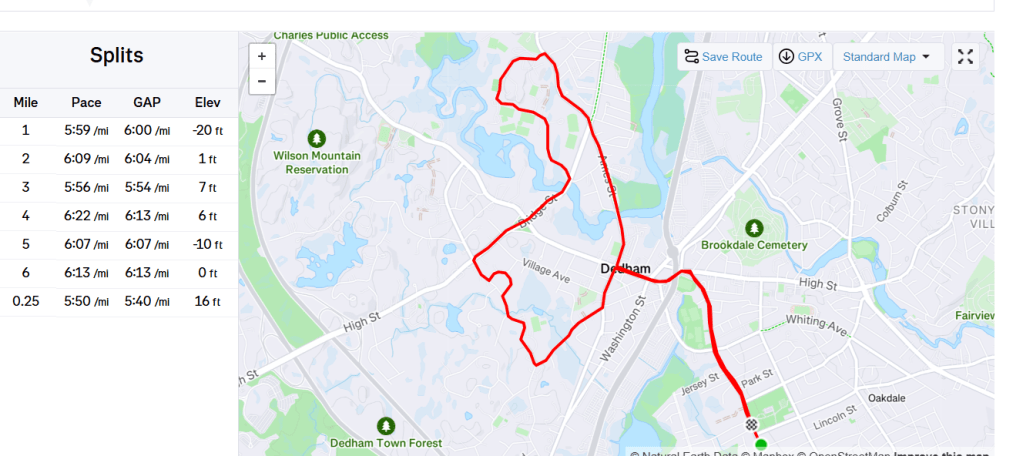
Then things got harder. The 4th mile is through a campus and it features two solid hills. The first one was 25 feet, not too bad, but after a short downhill the second hill climbs at 6% with a net gain of 40 feet. I really slowed on that one. My mile split was 6:22, the slowest of the day. The 5th and 6th miles were a grind, with lightly rolling terrain, the splits were 6:07 and 6:13. I was running out of gas during mile 6 and on the final turn, with about 1200 m to go, did a head check to see where my competitors were. I had about 20 seconds and although I was feeling uncomfortable I felt that I could hold the effort for a few more minutes. He’d have to have a blazing kick to run me down.
Course map with Garmin splits (probably about a second per mile faster than actual).
The last 500 m have a slight net uphill, with a final hill with about 350 to go. I threw it all down and closed in about 5:50 pace to hang onto a 38:17, good enough for 48th overall and 1st in my age class.
A final surge at the finish was enough to put me on the age grade podium, 3rd out of all runners/ages in the race.
That was a hard fought race–it’s going to be interesting once I get to the Twin Cities, with such strong and competitive teammates! Meanwhile, although we did not field a 60s team, the 70s team showed up strong and took 2nd place to a surging Shore Athletic Club from New Jersey. They rarely lose, but Shore is strong this year.
With BRR 70s team.
And speaking of future teammates, in the age grading category I edged another Twin Cities runner (early 60s) by 0.05% to score a 90.6% age grade, and 3rd place overall. That was probably the biggest achievement of the day.
I was really happy with this race. Although I felt rough in that 6th mile in particular, I held on and didn’t lose much ground. Had I put my head down and stayed with the leaders of that pack I might have eked out 8 or 10 more seconds and been at the 91% range or age grading (and moved up a spot), but other than that I don’t think I could have gone much faster.
Sisu. Finnish for strength, will, and determination.
Although we raced on just the third day of the spring, the World Masters Athletics (WMA) cross country championship was my biggest race for the spring or winter of 2025. Preparation this time was a little different, because I mixed in more cross country skiing (on average two workouts a week) for recreation and to supplement my training. The result was less running volume no more than 40-50 miles a week of running, compared to 60-65, and fewer workouts overall. The workouts I did were less intense and frequent than in years past.
Following US Nationals in January I took a four week break from tempo or speed workouts, and I resumed doing regular sessions in February. These sessions were nothing fancy. Typically, I would do a tempo or threshold session early in the week and a few days later something involving 5K to 10K effort. I did a couple double threshold days, but these were not an emphasis as they had been during the winter over the past few years. The routine was solid and I averaged about 8 or 9 hours a week of training since January.
This year’s WMA races were in Florida so I decided to include some heat training to prepare for warm/humid weather. Twice a week over the past five or six weeks I went to a community fitness center and spent 15 or 20 minutes in the steam room (the sauna was not functioning properly) and then donned a couple layers of running clothes and I ran on the treadmill for 25 to 45 minutes. This was nothing radical, but it seemed to serve me well in 2018, when I ran the Gasparilla 15K in Tampa.
I was prepared but heading into these championships did not feel as sharp as last summer, when I raced in Sweden, and not nearly has honed as I was in 2019 when the championships were in Poland. Noteabley, my recovery days of late have been much slower (about 30 seconds per mile) than in previous years. However, my workouts were close to what I had been doing in 2023 and 2024, and I felt confident that I could get another world medal and maybe a win.
I have never won a championship cross country race although I have done so on the roads more than a dozen times. Leading up to Sunday’s race, at the US cross country championship events I have had five podium finishes (2018, 2019, 2022, 2024, 2025), and two bronze medals at the WMA championships (2019, 2024). A win would be nice. Here is how it went down in Gainesville.
Travel
I traveled to Florida on Thursday evening, but did not get to my hotel in Jacksonville until midnight. On Friday I drove to Gainesville and my first stop was for a shakeout run at the cross country (and throws venue), about 10 miles west of the city and the University of Florida.
It was fun to drive through the city with it’s storied running history going back to the days of Olympic Gold Medalist Frank Shorter and writer John L. Parker Jr., author of Once a Runner, which was set in a fictitious version of Gainesville. And more recently it has been home of the NCAA track and field champion Florida Gators, where the likes of Olympic Gold Medalist Grant Holloway and Olympian Parker Valby still train.
The 2K loop on a former golf course was mostly flat, with a few bunkers along the way to break things up, but lumpy and sandy. I would like to see more hills and interesting terrain but it was fair enough.
Course preview on Friday
On Saturday I returned to the course, after my easy run and a few strides, I spotted my friend Jukka from Finland. He won WMA XC in 2019 and 2022. Last year we raced in Sweden and I was 3rd and he was 4th. That day I wore spikes and he wore Nike Vaporflies, and that may a have been the difference. Before the race the other day he showed me his brand new Nike Dragonfly XCs and said “Now we are even!”
On Friday I ran into my friend and primary competition, Jukka from Finland.
Otherwise I was very boring and only ventured out from my Airbnb for essential trips. I’d like to go back Gainesville some day for a winter training camp, then maybe I would have some more time to check out the city and university.
Race Day
Friday and Saturday mornings there were surprisingly cool in the 40s, and it only warmed up late in the morning. But things heated up quicky on Sunday when it warmed up almost 20 degrees from 50 to 70 in just a couple of hours (and then climbing to 80 later in the day).
The temperature was already in high 60s when we raced, and about 70 by the finish. It was a little warmer than I would like but thankfully it was not oppressive.
The race had three five-year age groups combined, covering men from age 55-69. Each time I do one of these WMA races age range gets larger. In 2019 we just ran one age group at a time, so you knew exactly where you were. And last summer in Sweden we had two age groups of men in their 60s. Nevertheless the field this year was not big (70 runners in all three age groups and only 20 in the men’s 65-69 age group.
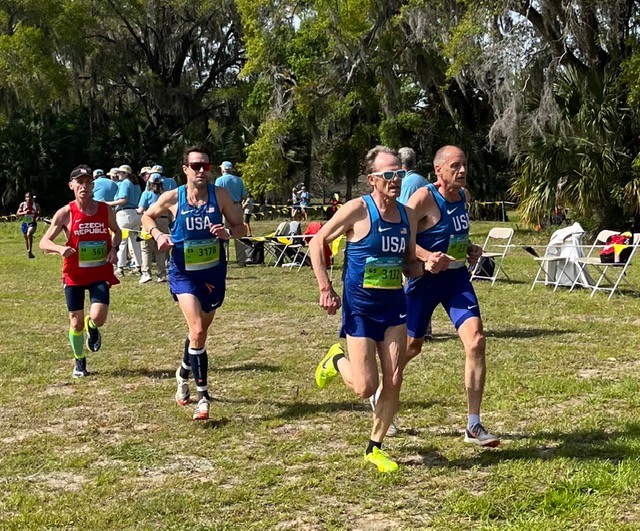
After getting yelled at and verbally abused by the official for a few minutes, typical for masters cross country, we finally lined up and the starter fired the gun. I immediately settled into to mid-pack and I counted three runners in my age group who went out faster. Three that I knew of at least: Jukka from Finland, a runner from Algeria (Alem), and another from Argentina. Jukka and Alem gapped me by more than 30-40 meters within the first 400, where we had our first turn. And that gap ended up making the difference on Sunday.
Even though they were well ahead, I stuck to my pacing throughout the first lap and reeled in a half dozen runners and I felt I was running about where I should be. My first mile was in 6:18.
Making my way through the field, end of lap 1.
By the end of the lap, Ricardo the runner from Argentina was coming back, but the runners from Finland and Algeria seemed to have increased their advantage over 40 m. I passed Ricardo early in the second lap and instinctively picked up the pace, and set to work on reeling the other two. The by midway through that lap, Jukka had pulled away from the Algerian, who had slowed down. I caught and passed Alem just after lap 2, and I surged by to discourage him from going with me.
I was getting thirsty and hot, but had run by the water table twice because they had placed it way off to the left side of the course just before a right hand turn. I didn’t even see the table on the first two laps.
Onto the final lap. One more to catch, Jukka, my friend from Finland. He was still about 30 meters ahead. At the end of lap 3 I finally spotted the water table off to the left side and decided to veer off the tangent to grab a bottle (it was beyond me why they put the table way out there) so I could get a sip and splash some on my head and arms. That felt great and I was rejuvenated, but I lost a few meters. 2K to make the gap 40 meters. Catching Jukka was possible but only if he would have to fade some. I did make up some ground before starting my kick with about 500 m to go. I got back to about 20 or 25 meters back. On the last turn, just 200 m from the finish I went into a full sprint a but then he also kicked it in and I finished 5.6 seconds back.
I congratulated Jukka, who could only mutter “I feel so bad right now!” We had pushed each other out there. This race was all about Sisu. Going against Jukka the Finn, he showed a lot of Sisu out there and would not let up. I’m half Finnish myself. I felt that also ran with guts and determination, I just did not quite have that extra gear on to reel him in.
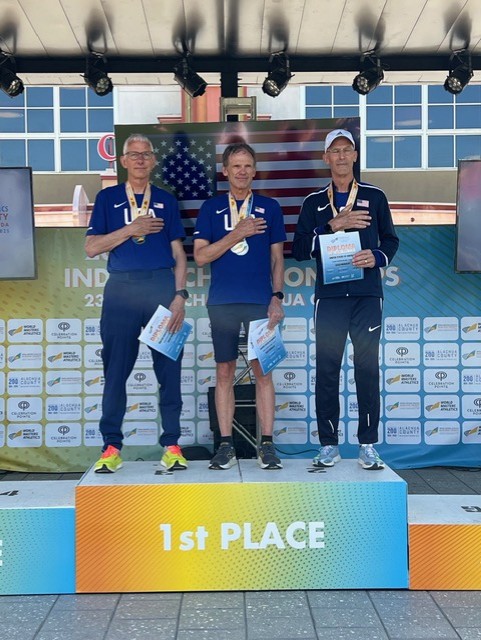
I did not get the gold medal but did win an World Championship upgrade to a silver. A win would have been great, but I am not too disappointed. We won the team title (also did in 2024), so we got another medal for that. Avg. 6:20/mile, about 87% age grade which has been about where I have been landing for XC races over the past couple of years.
Men’s 65-69 age group individual podium at the WMA 8K cross country championships in Florida.
Individually it was close but not quite. Teamwise, which is why I chose this race instead of the 10K road race, we won easily. In fact we beat all comers (best of the rest combined), and would have been 2nd behind the American men in the 60-64 category, where he did have a half dozen teams.
Team USA taking the age group gold medal in the 8K cross country at the WMA championships.
I lined up for Saturday’s Sharin’ O’ The Green 5K hoping not to have a blow out. Not my shoes, and not folding in the stretch, I was concerned about holding my breakfast and yesterday’s meals in my intestine. This was my first bicarb (sodium bicarbonate) race experiment and I lived to tell the tale.
Other than some casual ski races in January and February, on the schedule for fitness more than competition, I had only raced once since November and that was 9 weeks ago. However, I needed a rust buster and test effort for the upcoming WMA cross country event this month. I also got my hands on some Maurten bicarb, which is all the rage this year, but like anything new in running that shows success it’s hard to get. Fortunately, one of my friends knows people in the company and was able to get package with four treatments.
Last week I listened to the Physiology of Endurance Running Podcast (they’re nerdy but it’s really good), and their recent interview with Dr. Andy Sparks a researcher who did much of the work on sodium bicarbonate in sport over the past decade. He’s now a research manager with Maurten. In that interview he told tales of their earlier research where athletes had massive diarrheal outbursts or upset stomachs after taking bicarb. But that was before they developed an encapsulated formula that releases the bicarbonate in your intestine, and at a slower rate, rather than your stomach. The issue is the acids in the stomach don’t mix well with the base in the bicarbonate, and that often leads to an upset digestive system.
For years researchers athletes and coaches have recognized the sodium bicarbonate can buffer the exercise induced acidosis in blood and muscles, but the trick was to find a way to get enough into an athlete’s system while not causing digestive upset. However, recently Dr. Sparks and others have shown that encapsulating the bicarbonate and taking it with a carbohydrate gel product, it can be consumed by athletes while not resulting in digestive issues. Indeed it appears to allow greater endurance by buffering the blood.
The trick is that you need to follow the protocol. It’s pretty simple. Eat a light meal a few hours ahead of your exercise (or race), two hours before mix the gel caplets into 200 ml of water, and then a couple of minutes later add in the encapsulated bicarb, mix and then slurp down the tasteless gel in one bout but without chewing the bicarb.
How did it go?
Saturday’s Race
We decided to drive the 80-90 minutes to Fort Collins on Saturday morning, rather than stay in a hotel overnight. I was a little nervous about the bicarb protocol and timing it right while we were enroute, but decided to go ahead with the idea that we would stop about half way there, 2 hours ahead of the race.
After 45 minutes of driving we pulled off and stopped at a service station where I mixed the goop, waited 5 minutes and gulped it down without gagging anything and spilling only a half teaspoon. Two hours to race time.
We arrived in Fort Collins about an hour ahead of the race where I picked up my bib and set about with the warm up. I had planned on 3 miles, but with porta john lines (especially important on this day!) I got in 2 miles with some drills, a short tempo, and some strides. We lined up and everyone one seemed to converge at once, and I could only get as far up as the 4th row, with 30 or 40 people ahead of me in a field that did not look deep.
The plan was to run about 6:08-6:10 over the first mile and then see how it would go on the bike path over the final two miles. My goal was run about 19:00 for the 5K, which age grades to about 88 %.
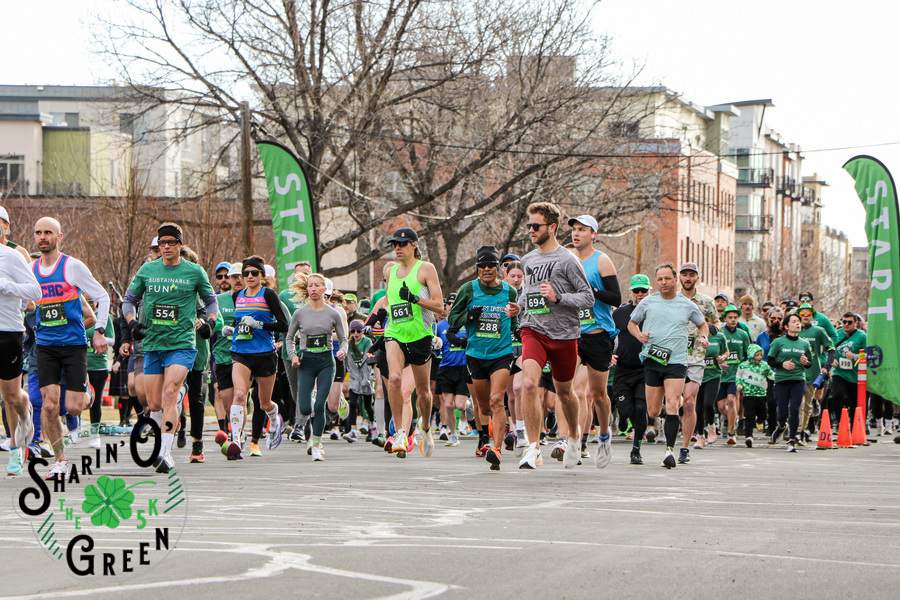
20 meters into the race, and slightly boxed, in you can see my hat and sunglasses between numbers 288 and 694.
We blasted out of the start and some from behind shot ahead. The pace over the first few hundred meters was faster than I had wanted (sub 6) so I eased up a little. I split the mile in about 6:02, which was a little fast. My breathing was okay.
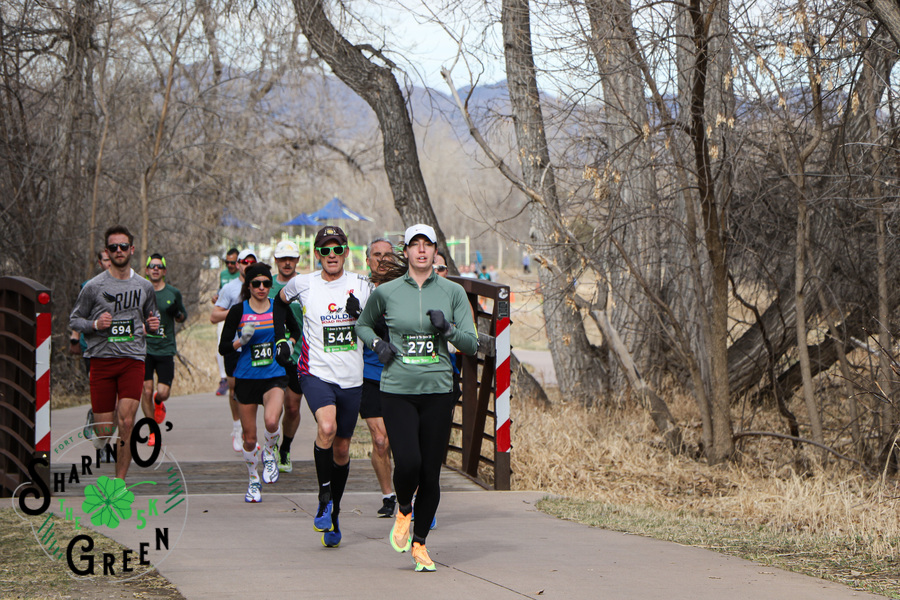
We had a bit of a headwind as we turned onto the bike path just after one mile. I tucked into a large pack of about 10 runners and found myself near the front of the group. It was a little unnerving to hear so many footsteps right on my heals. I braked a few times because the leaders of the group slowed a bit, and also eased up once, at about half way because a guy was breathing so heavily, practically in my ear. That was a distraction and either I could pick it up and get a gap or slow a bit and run behind him for a bit.
On the bike path, about 2 km into the race.
I fell back to about 4th or 5th in that pack, trying to keep focused and in contact. By 2 miles I had moved back up some and the pack was dissipating by then. We split in about 12:10, so a 6:08 second mile. That felt about right and it felt like I could run about 19-flat or under if I could hang on.
However, I started to get the feeling that I might need to go to the bathroom. Hold on! Less than a mile to go. I got gassed (tired) at 2.5 and slowed down for a few hundred meters. Two runners went by quickly. They were younger and closed under 6:00 for the last mile. Then two more went by, but they were not moving as fast and I was able to maintain a better pace, about 5 meters behind them. We popped off the river and over a bridge at about 2.8 miles, and I was back onto 6:00-6:10 pace for the stretch. Over the last 200 or 250 m, just before the 3 mile marker (3 miles in 18:28), I threw down all I could and had a strong kick (5:40 pace). I passed those two and pulled away by 4 or 5 seconds. Officially finishing 19:17, but I think that was a little long. And my watch had me closer to 19:05+/-.
Finishing kick!
My intestines were okay, but I did seek the nearest bathroom within 2-3 minutes after crossing the line. No upsets or accidents. All was good.
Post-Hoc
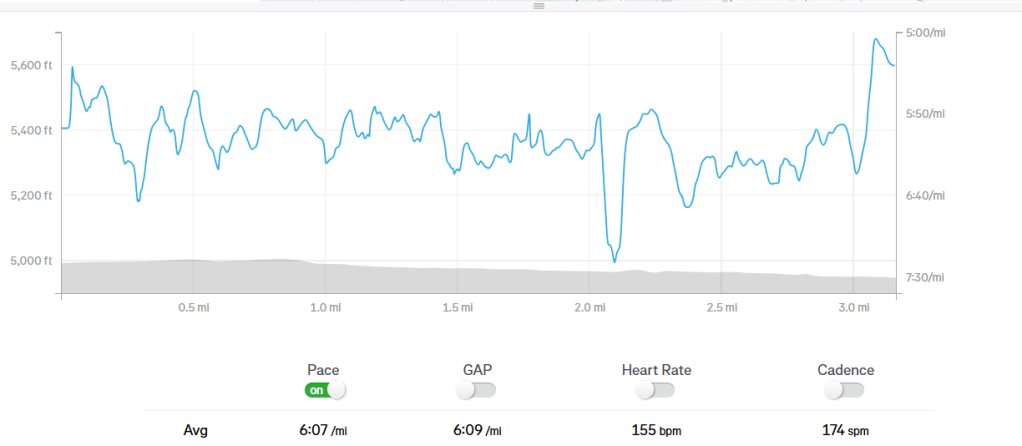
This is why we do rust busters. I think my fitness is there, but the pacing was not perfect (see pace chart). The finish was crazy fast, however, and that’s encouraging.
Pace chart from Saturday’s 5K. Note the quick start. The big dip at 2.1 miles was actually going under a double bridge. Ideally I would have liked to hold about 6:10 pace from 2.3 to 3 miles, and hopefully can find that gear when we have the bigger races.
I finished top 20 and won my age group, and pretty much achieved my pre-race goals.
Age grade was 87% for the full time for 5K, if you consider that the course seemed long (3.16 miles) it was over 88%. I probably hit that first mile a bit too fast, maybe 5 or 6 seconds, and that’s why struggled some over the 3rd mile.
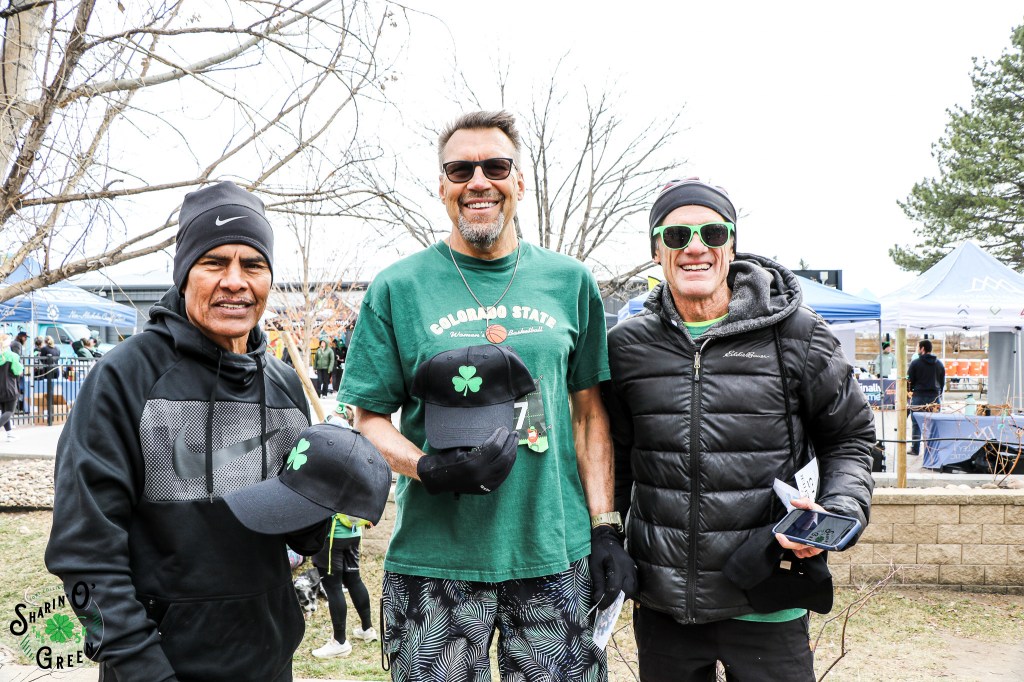
Age group winners at Saturday’s 5K in Fort Collins.
What about the bicarb? I think there is something there, that was my best kick in a 5K in a long time. Usually I drop a few seconds in pace, maybe 10-15 seconds per mile under the overall pace, but this was 30+ seconds, and I felt I could have gone another 100-150 meters at this sprint effort, instead of feeling utterly spent when crossing the line. So I am encouraged.
My post-marathon recovery has been middle of the road, there were no setbacks and it hasn’t dragged on but there has not been a fitness boost. I find it interesting how some people come out of a marathon supercharged and they set huge 5K or 10K PBs in the weeks immediately following a marathon training block and race. That has never happened to me. Only once or twice have I felt decent within a month after a marathon. That just shows how everyone has their own physical and mental response to the long event.
Weeks 1, 2, 3: Recovery with a Big R
I took off a few days of running or aerobic activity other than walking the dog a few times a day. Then I cycled for a couple days. Ran on Day 6 post-marathon, so I had reasonable, but not extensive break. I got in about 14 miles in that first week.
Fortunately we got some early snowfall (in fact much of it while were away in Indianapolis for the marathon) and I was able to incorporate some cross country skiing for cross training (and for its own effect), with three days of skiing in November and now twice a week in December.
The air is thin at 9000 feet but it’s refreshing.
I rolled back into running on the second week back, with 43 miles of easy running and a short ski outing at Breckenridge. On the third week I put in 49 miles of running plus a 15 km ski at Frisco, my old stomping grounds (ca. 1986-87). I did my first tempo effort, just a short 15 or so minutes of effort at 6:50 pace or so on trails on the day before Thanksgiving.
I did have a bit of Turkey Trot FOMO, I kind of wanted to do a race on Thanksgiving but knew I was not mentally or physically ready to line up after a long 2024 campaign. Skiing that day was a good alternative. No traffic no crowds on Thanksgiving day.
Weeks 4, 5: Some Volume
I got my volume mojo back in December with a couple decent weeks. However, workout quality has been lagging.
Over the first week of December I ran 50 miles and got in two ski days of about 28 km (2.2 hours) for a weekly sum of just over 9 hours. I did a double threshold on the 4th. The AM part was actually a pretty stiff session with 4X 1 mile averaging about 6:30. That’s more mid-season level for me but I went with it. The PM part was a pretty mild 8x 30 second surge/30 second recovery on a gravel path. That day gave me some confidence so I signed up for a 5K for December 15.
The second week of the month (week 5 post-marathon) was more of the same, although truthfully I don’t think I felt as well as on the previous week. I did 43 miles of running and two ski outings of 12 and 21 km for a total of 9.3 hours.
My double threshold on Tuesday was a bit of a weather bust because we got several inches of snow overnight. I had to cut an AM treadmill session short when after 2X 6 min reps (plan was 4X) a guy with a cold lined up right next to me (3 feet away, no social distancing there!) so I bailed. And the second workout later in the day was supposed to be 8X 2 min at CV effort with a 1 minute recovery. But with the ice on the path it was 6X 2, 1X 3 and a fartlek within a fartlek because I had to slow down on the icy/snowy patches and then speed up on the dry stretches.
Running-wise the rest of the week was easy, but I did that 21 km of skiing on Thursday.
Training Race
On Sunday I signed up for the Ugly Sweater 5K in Denver. Silly theme, but overall it’s a well-managed race. Shoutout to Derek and Jessica for their series (although I miss the Winter Distance Series at Hudson Garden). Washington Park in South Denver is probably the best place in the entire city for a 5K to 10K road race. It’s almost flat. No traffic. And the road is wide enough to accommodate thousands of participants.
I kind of worked through this one, but was hoping to finish well under 20 minutes for 5K and to take home an age group award. It ended up being mixed on those goals.
The day was about as perfect as you can get here in December. It was cold overnight, and I was freezing on my 2+ mile warm up at about 30 degrees. But by 8:45 it had warmed up to the mid-30s and with full sunshine and no wind to speak of I suddenly felt overdressed with tights, double shirt, beanie and gloves. With 10 minutes to go I stripped off my tights and tossed the gloves and decided to be lightly dressed.
The plan was to go out in about 6:20-30 and then bring it down from there. I didn’t really stick to the plan.
I lined up in about the 4th row, should have been farther back. We started and I was almost immediately swallowed up by another dozen or two runners. I checked my watch at about 200 meters in, and saw that I was running at about 5:40/mile pace. Way too fast. So I eased up, and some more runners went around me. I tried to settle in. Checking again at about a half mile and it was still 6:10 pace. Still too fast. So I eased up some more. However, by then the damage had been done.
Start of the race, you can see my red cap between #1127 and the guy in the white singlet. Yeah, too far up at the start.
I split the mile at about 6:15 and decided to just hang onto the current effort for as long as I could. A pack of about 5 or 6 runners had formed about 20 meters ahead. Otherwise I was in sort of a no mans land as we headed north through the park. And that’s pretty much where I stayed the rest of the way. Breathing was a bit hard, I passed one young runner who was obviously overdressed in a sweater and Christmas pajama pants and a Santa hat. I just hung behind that pack through half way and 2 miles (12:46). There are two small hills before the lap (2.2 miles) and I kind of eased up on those, falling behind that pack a bit. Over the last hill just before the lap I tried to gradually increase my pace. I caught one runner, a younger woman. And we had ourselves a duel for the rest of the way.
End of mile 2, feeling the pain cave.
Felt that I was just hanging on with about a half mile to go, as we were lapping the back of the pack walkers on the west side of the park. I surged with about 600 to go, pulling ahead of my female competitor, but immediately felt that in my lungs so let up and she passed again. I hung back about 5 meters and then threw in a final surge with 300 to go. That didn’t last either and she passed me back before the final turn (150 to go). From then on I just tried to hold form and not throw up.
A final kick.
Final result: 20:11 for 3.16 miles, the course was a little long, probably off by 60 or 70 meters. I’ll split the difference between my Garmin and official time and call it 20:00.
Nevertheless, I believe that’s my slowest time in a 5K road race (about equal to the training race I did in September, but that was a definite tempo-type effort, this was a more of a concerted race effort.
It was slow but I am not disappointed. It was about what I could expect for five weeks after a marathon. An 83% age grade at 5200′ elevation. (3rd overall in age grading). I’m not going to complain. I enjoyed the morning and appreciate the race management and work that went on to host this late season event.
This was my fifth attempt to get on the five decades sub-3 marathons (aka 5D/S3) list. In my past I ran 2:34 in the 1980s, 2:44 during 1990s, 2:54 in the 00s, and 2:58 in 2018. The attempts the 2020s have been 3:02, 3:00, 3:01, 3:05.
Otherwise, this was a big year of racing with a 25K and two half marathons on the docket. I knew going in, that it would be a big ask to fit in a late year marathon.
In August I ran the world masters half marathon in Europe, got sick on the return, and it took a couple of weeks to get my legs back. Going back to the first week of September mileage was 50, 57, 70, 70, 61, 70, 64, 70, 68, and taper weeks of 36 and 31 miles. I got in four decent long runs of 19, 20, 22, and 20 miles, and a mid-long run of 11-13 on most of those weeks. The long runs included progression efforts to marathon pace or just a little over, and most of the mid-long runs had tempo or threshold workouts.
The Race, How Did it Go?
I carbo-loaded a bit more than usual on Friday, but not too extreme. And for the race I had Maurten 160 in a handheld for the first 50 minutes and after that used Maurten gel every 30 minutes (so 480 calories for the race). That was about all I could take in.
After some delays I cut it close and got into the starting corral just minutes before the start.
The first 4-5 miles of this race are very crowded. We hit the first few miles a bit slower than race pace and the 5 mile split was in the 34:30s. Through 10 miles I felt heavy from the carbo loading, but not terrible. I kept clicking off 6:55s or so and was 68:40s for 10 miles. Then I fell into a funk, and was questioning whether I should continue with this return to sub 3 quest, and also wondering if I could maintain or increase pace, to keep o the sub 3 quest. That was not a good headspace.
We passed the half, a bit off pace and then 15 miles n 1:44, and knew that sub 3 was no longer on the table. I just resolved to keep on the pace for as long as I could.
My mantra for the day was to live in the mile, and that’s what I tried to re-focus on. And I also thought about resilience. The mostly the downhill 19th mile felt great! And I held the momentum for another mile. But then my pace fell off 7:05 -7:10s and the battle became less about time and more about just finishing. Came through 20 miles in 2:18. 10K to go. Once we got back onto the city streets after about 21 miles I focused by making it from stoplight to stoplight and that helped keep my head in the game.
The last few miles weren’t terrible, nor were they great. I could not ratchet my pace down to sub 6:50, that just wasn’t in the tank. But 7:05-7:10 was sustainable.
My wife and son (he’d just finished the half) were on the side of the course with about a half km to go, before the last couple of turns. With less than a quarter go however, my little toe blew up (ended up being a popped blister, and I’m certain to lose another toenail), so I had sort of a sprint-hobble over the last bit of the course, crossing in 3:03.
Post-race
I grabbed some food and got my medal and made my way to the gear tents, but soon after getting my bag I got nauseous and started throwing up. That only lasted for a minute or so, but it felt longer. Then I felt better. Lolled around the area for an hour or so until we all reconvened. Enjoyed some good meals later in the day a couple of beers in the evening.
With family, M&M who both set PBs in Indy!
Relaxing after the race.
Post Hoc, What worked and What Didn’t?
I’ll give the training block a mixed review. I did get an adequate amount of mileage, with long runs and workouts, but an 8-week marathon-specific build may not have been enough. However, I did have solid a summer HM block preceding that but it was hard to come back from a peak week (in August) in just a couple of months.
Fueling and hydration went okay. I did not bonk or cramp. That was more gels than I’m used to, but still it was less than some are now recommending.
My mental prep and attitude? Also mixed. I was probably less nervous for this race than any marathon I have done, going back 40+ years. That’s good. But I have never felt so off in the middle of a race—that time between 10 and 15 or so miles, I when I was questioning whether I should do any more of these, in particular another sub 3 attempt. Fortunately, I was able to pull out of that and get back into the mindset of just being in the mile.
The Future?
I don’t know. No doubt I enjoy distances, say 25K and under (down to about 5K) more than I do the marathon. What does that tell you? I would at least like to get NYC done to complete the North American WMM tour. And my son and daughter-in-law are already talking about doing Berlin someday. But breaking 3 again? Has that ship sailed?
I finished my eight week marathon-specific block the other week without too much travail. Most importantly I got in the long runs, including three 20+ milers, and averaged 60-70 mile weeks mostly on single workouts. That’s one difference between this block and those in recent years where I did a fair amount of doubling on non-long run days. Then it was easier to do some doubles due to my work schedule. Now I don’t have to be concerned with that.
I would have liked to have had some extra weeks to prepare following the WMAs, but that would have meant running a different marathon (Philadelphia or CIM). I think/hope Indianapolis will be a good choice for 2024.
I didn’t get in any marquee workouts, but think that’s okay. Although most workouts were B or B- the 1:24 half marathon last month was perfect for preparation and as a fitness test. I’ll go with it.
That’s the good part. The first week of taper wasn’t so great, although the week did end okay.
I did my last long run a week ago Friday, 20 miles with a progression after about 8 miles, closing the last 3 in the mid-low 7s (approaching marathon effort on tired legs). However, the next week of mostly easy running, with one day off for recovery, were just blah. It was the worst I had felt all year. Every run started at 9:30 to 10+ minute pace and I was never able to shake out of feeling overtired, and slow, like 20 seconds per mile slower for easy pace (8:30s-50s), although my heart rate was kind of high (small caveat, dog ate my chest strap so using the watch band). I even cut back miles on some days, which didn’t seem to help.
I went into Saturday’s race feeling rather bleak. Home races are actually harder mentally than traveling, because here you have a target on your back and you don’t know who is going to come out of the woodwork.
Plus, there were some bigger implications for the Masters Grand Prix Standings. I was in 4th place overall, needed a finish to move into third (that’d be easy enough, just 5K), to win I would need an all out victory. Not likely with the hottest masters runner on the circuit now (named USATF Athlete of the Week recently, for setting the national record in the 1500 m and 1 mile). A second place would put me in a three-way tie for first, with final standings to be decided by tie-breakers (specifically head to head competition during the year and number of victories on the eight race circuit).
So yeah, I was feeling some pressure.
USATF Masters 5K XC Championships
My last two outings on this course were a disaster, including the 2022 championships, where came into the race with a head cold and faded to 6th place (healthy I think I would have been 2nd). And last year’s regional championship was even worse, coming off of the marathon four weeks earlier I just wasn’t ready to run hard. So that made me a little nervous.
Boulder Flatirons from the race venue, Harlow Platts Park.
Competition would be good, with four of the top five runners in my age group competing. However, at the last minute one of the runners had to scratch because his flight was cancelled. That was a bummer–although he had been saying that he was gunning for me (gulp!) I was also looking forward to a showdown on home turf. So make that three of the top five.
I drove the half hour to the park in Boulder, feeling a little nervous. 5Ks at altitude are always tough, and cross country 5Ks are all the more difficult. Add in the competition, the standings, and team bragging rights. I didn’t quite get butterflies (like I did in Sweden over the summer) but my chest was tight on the drive up.
Warm up was so-so. Just a slow jog for about 20 minutes and by the time I got my spikes on and found my teammates for a last minute check-in (we cut it close!), we were lined up. I only got in one 50 meter stride out, and maybe 30 meters on the way back.
Gentlemen check your watches.
The Race
After the last minute check in scramble we lined up, the starter gave a couple of quick instructions and without even a ready (or toyour marks), the gun fired!
And we’re off!
My goal on Saturday was to to hold steady throughout and not blow up as I had in 2022 and 2023. We were quickly off the line and I was actually near the front for 50 or 60 meters before settling in. My teammate Mark shot ahead and Adam passed me. The pace felt fast on the slight downhill and I did not want to blow it in the first kilometer. I just relaxed. And that my mantra through the first lap. Dan, the age group juggernaut had 50 meters on me within the first half km. So I’d be fighting for 2nd in the age group. The field wasn’t huge (80 runners, compared to 150 or so in 2022) so I was able to find a spot with breathing room early on.
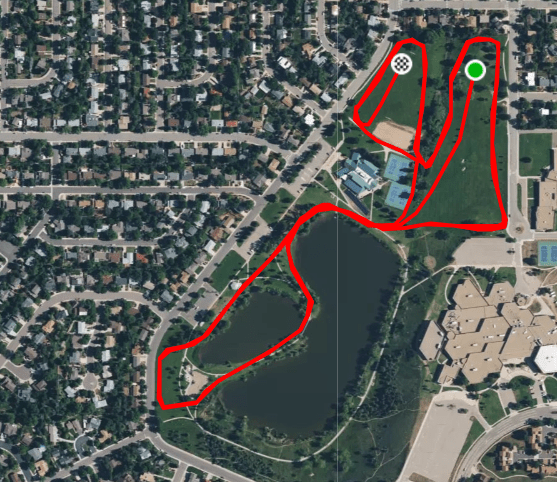
The two lap course at Harlow Platts Park in Boulder.
I decided not to look at my watch, or to minimize it, in this race and run by feel. After the hectic first km we circled back along the lake. I could hear at least one runner close on my heels, breathing heavily. Mark and a half dozen runners were about 30 meters ahead and I sort of sensed that there were a fair number of runners just behind me, so I was leading what the third or fourth chase pack.
We approached the hill at about 1.4 km, and my goal was not to charge up it, to stay relaxed. Those ahead gained some ground and the runner behind pulled up alongside me momentarily. It was Ken, who I had to beat today in order to get that tie in the overall standings. He’s from sea level and I figured I could outrun him over the stretch, but at the same time he’s a very tough competitor and I did not want to leave it to the end. So the crest of the hill (it’s about 10 meters of climb over 130 meters) I made the sharp left and threw in a surge (not in energy so much as just letting gravity do its work), and with 50 or 60 meters I could tell that I had dropped him.
No more footsteps from behind on this day. It was just a matter of hanging on and keeping that pack in sight.
At half way I was tempted to look at my watch but decided otherwise, and for the last time told myself to relax. I soon caught Mark and that pack and figured this would be a good spot. Don’t let them go! I led a few of them for a bit, but dropped back a little by about 2 miles (circling back by the lake again). My breathing was decent, turnover, okay and I felt I could hold this. And did just that.
Mark pulled away on the final hill but I was able to regain it on the downhill. We ran alongside into the soccer field area (0.5K to go) and I was able to get a few steps as we routed around the fields, and had enough to throw down a strong kick to finish in just under 19:30.
Final meters USATF Masters National 5k XC Championship.
I ended up 2nd in the age group, a full minute behind Dan, who is on a record breaking spree. Our team won, fairly handily against our cross-town/cross-state rivals. This was our first team win in two years and first time actually fielding a team since June of 2023. That was all good.
Post hoc analysis. It all worked out. My splits were fairly even (accounting for hills) and I managed my output just about right.
I promise that one of these days I’ll be putting up more content on training philosophy and such. Not just race reports. Soon. Soon I hope.
WMA Recovery and Subsequent Training
It took me almost a month to recover from racing and traveling to Sweden in August. I got sick and that took a few days to get over, and then just felt fatigued for a few weeks. So my mileage took a dip in early September. Not ideal for fall marathon training.
Wait, what?
Training profile since early August, low mark after I got back from overseas and had to take a few days off to recover from travel.
Yeah, I’m doing a marathon in November, date and location TBA! The three main race goals for 2024 were to run the 25K in May and attempt the American Record for my age (check), run at World Masters and medal in at least one race, win the cross country team title, and get a second medal in the half marathon (two checks out of three isn’t terrible).
Since mid-September I have been hitting 60-70 mile weeks with consistency and feeling okay. It wasn’t until the last week of September that I actually felt right again. The primary focus has been to build the long runs (from 15-17 miles over the summer, to 19+ miles). I have to admit that do not really like the long run, and maybe that’s the issue with my difficulty to break 3 hours again at this late stage of my running career. Anything over 2 hours is challenging, and I’m not sure it’s supposed to be that way or not.
I listened to Steve Sisson’s podcast last year and he went on and on about how the long run is the epitome of the training week. I get a little nervous for the long runs, counting minutes for the first few miles, then I might feel good until about half way through before feeling tired, sore, and often a little nauseous from the energy gels and sloshing belly. I conclude the day by feeling like a blob. A hungry blob, but a blob nonetheless.
Anyway, in September I did long runs of 16,17, 19 miles and felt best on the last one, which was about 10 days before last week’s half marathon. In this time I have not done many workouts, other than some tempo and pace work on the mid-long runs (10-13 miles with 4-6 miles of faster running on those). Other days have been either recovery (5 to 7 miles easy) or endurance (8 to 10 miles) with a few strides thrown in there.
Last Saturday I did 22 miles in 3 hours. That was a grind, but then again not terrible either. I felt better in the second half than over the first, and ran a pretty solid negative split (sub 8s) over the last 90 minutes.
My legs haven’t felt great, i.e., snappy or fast, since mid-August. But that’s marathon training.
The goal, again, is sub 3 to join that rare club of five decades sub 3 (5DS3), of which only a dozen or so runners have ever done. Let’s go!
At six weeks after the WMA half I felt fairly recovered from that effort. Going into the race I had four solid weeks of marathon training in the legs and I was feeling it. The plan was to taper that week, and run maybe 50 miles total including the race, but unfortunately my main competition pulled out due to an injury. On paper at least, it looked like I could win this one fairly easily. So I kept the mileage at ~10 miles a day through Wednesday, and just ran an easy 3+ on the course on Friday, so I’d be a little bit rested. I don’t know how much good that did.
The course wound through Fort Benjamin Harrison State Park, outside of Indianapolis. Race day was as good as it gets, mid-50s with a light breeze.
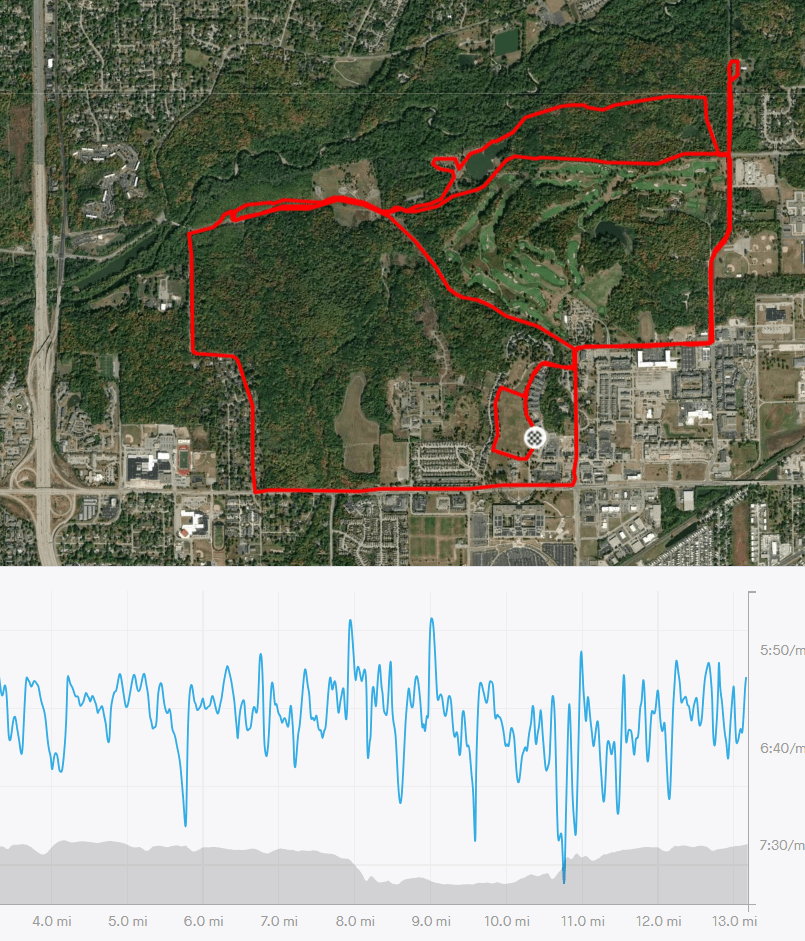
Half marathon course and part of the profile.
I expected the course to have two decent hills (of 80-90 feet) at about mile 3 and 10, but otherwise to be flat. The race profile showed that, but in reality bigger hills were more like 100 feet plus, and there were rollers the entire way, so instead of under 200 feet of vertical (fairly fast), it was more like 400 (and not terribly fast). That was okay, everyone had the same course and I generally do pretty well on hilly courses. I went in still thinking I could run under 1:24 and score an 90% age grade.
The Race
I knew from the very start that my legs weren’t feeling rested, there was no bounce in that first mile and the knowledge crept in that this might be a long day. The going was little tight through that first mile (which had six or seven sharp turns) but we strung out by the time we reached the rather long descent into the park itself. I was kind of leading a group of a dozen or so runners, including several in their 60s and two very fast masters women one 60+ and the other in her late 50s. We split the the mile in 6:22, which is about where I wanted to be, so I settled in through 5K (19:47). I was feeling okay through that point, and that was about it for feeling decent!
On the first big climb I fell back from the three or four leaders of that group, and could tell it wasn’t going to be a breakout day and that sub 1:24 (6:24 pace) would be tough to achieve. Nevertheless, I did fight back for a couple of miles, including a couple pretty decent drops and inclines on the four lane thoroughfare. They eventually pulled away, I thought I was slowing down, but that wasn’t the case. I was holding onto 6:20-6:25 pace but they sped up to 6:10 or so. Good on them. I ran much of the next 4 or 5 miles in my own private no-man’s land, although at about 8 or 9 we had a couple of spots where we switched back, and wow, there was quite a string of runners not far behind, and a big pack of 15 or so, going with the 1:25 pace group. At this point I was still on low or sub 1:24 pace (59:37 at 15K), but the big (1 mile long) hill, including a quarter mile at 10% grade called “Kill the Hill” was looming ahead.
A couple of runners caught up between miles 8 and 10 and we had a semi-pack strung out over 15 or 20 meters.
Knowing it would be a grind I eased up as soon as the grade increased a bit and held an easier stride until we reached Kill the Hill, where I shortened my steps and tried not to lose any more ground. I did not want more of those runners behind me to catch up and pass. I hung on but the damage was done with a 6:45 11th mile. There went sub 1:24.
Therein over the rolling last 2 miles I just kind of hung on, getting passed here and there by someone closing faster, but they were in the open race. My secondary goal with this race was to run strong but not dig too deeply–I did that in Sweden and will need to do that again next month in the marathon. I think I accomplished that. The 12th mile was a grind with a number of small hills and a net elevation increase (6:33). The last mile was out of the park and back onto city streets, smelling the finish, I could pick it up some and covered the last 1.1 at about 6:20 pace to finish in just under 1:24:30. 1st in age group and 89.5% age grade (2nd overall).
Maybe a little short of what I had wanted but still a good day, and haul (medals and cash). I went home pretty happy with the effort.
Moments after the finish, with Rick the 60-64 age group winner.
Short version, 2,500 mile road trip (minus side trips in California), nine days, two gold medals.
I think next time we’ll fly. A week ago Sunday we had a flat tire before even starting the trip, which cost us five hours and had to stay in a motel in Salt Lake City instead of camping in Nevada. And in the middle of the week our car battery died, thinking it was a starter or alternator we took the car into the shop. That cost $300. Driving all those miles in 100 degree temps wasn’t pleasant either.
Road Trip
I do appreciate the scenery, however, so here’s a few thousand words in pictures.
Utah canyon country.
Rainbow over Provo, Utah.
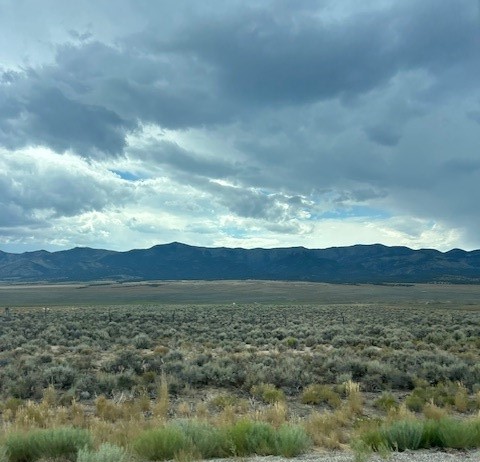
Egan Range, eastern Nevada.
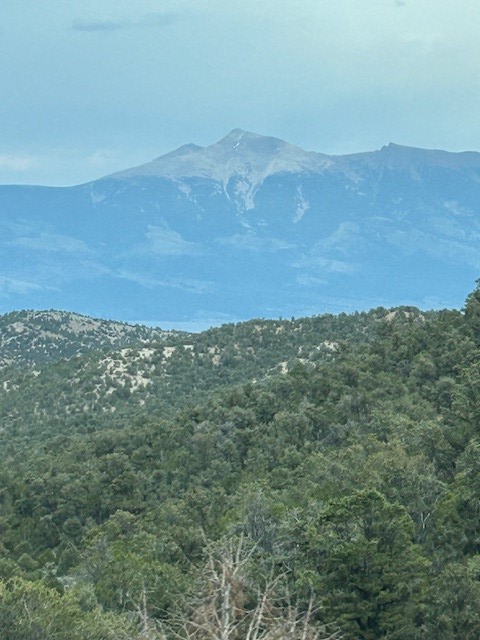
Mt Wheeler National Park, Nevada.
Campsite sunrise near Truckee, California.
The Agony of Setting up the 4 X 800 Relay
Ahh the relay. For the past year almost, our team has talked about putting together an age group team that could challenge for the American club record of 11:22. That only requires a 2:50 per leg and on paper we had the runners to do it. Months ago we sent out signals, and I was appointed the de facto coordinator. I don’t think I did a great job at that for this event. However, our “team” ages 60-69 is more a confederation of runners without a lot of cohesion. And less so post 2020-21 pandemic. Just say that there are some personal and political differences in this team, and some aren’t afraid to verbally smash you in the mouth if you happen to disagree.
Not to mention, injuries and health. It’s hard to get four guys in our age group healthy enough to line up, and a track race is all the more risky.
I spent months encouraging an cajoling potential relay members and typically got mixed responses. Two of us were committed, one seemed to be ready if we had a team, a couple were injured or not interested, and one had been battling off and on injuries over the past year and had the attitude that if we are not going to set a record then the travel is not worth it. I even offered space at my brother-in-law’s place in Sacramento as a incentive. In the weeks leading up to the championships we seemed to have settled into a quartet of four capable runners who on paper could pull it off.
Creating a mental form chart, I figured I could run under 2:35 on a good day, Dan capable of matching that, maybe faster maybe a bit slower. Jack was hoping for 2:40-2:45 or so, and Bob sub 3. Adding those up our best case indicated maybe 10:50 for the four of us. Reasonable expectation without a blow up by one of us certainly put us comfortably in a sub 11:20 (for example, a more conservative estimate would put us at about 2:35, 2:40, 2:50, 3:00 for a 11:05, still well under the record).
We had a handoff practice a little over a week before the race and all seemed well. Shots were fired on the weekend, however, as one of our guys complained of a bad foot. He’d said he would run, but it would be some risk. We really needed a back up, but had none. Nevertheless, Tamara and left town on Sunday thinking we’d all be good.
I was looking forward to racing the relay on Thursday.
On Monday morning we had just driven into Nevada and I got a text. One of our guys was out. No explanation. Just that he wouldn’t make the trip. Cold feet or injured? I spent the morning texting, to see if we could pull together a make up team. It was so frustrating. I just don’t like the attitude that either you must set a record or forget about, especially at such a late hour. That is just poor etiquette.
I told our teammate with the bad foot to stay home and heal up. Wasn’t worth it for him to travel that far and risk further injury for a make up team.
Fortunately, we had other teammates in the 60-64 category and rest of us came together and made a team of our own teammates, with four guys in the 60-69 range, with a couple in their 70s as back ups. We wouldn’t get a record but we could score points and medal in the event.
By the time we arrived in Sacramento on Monday evening the on again off again relay was back on, although not the age group line up that we had spent months trying to put together. Come on guys, it should not be this difficult!
Brutally Hot Sacramento
The temperatures rose into the 100s each day that we were in Sacramento, which made for some challenging race conditions. The mornings were actually reasonable, 60-70s until about 9 or 10 AM most days. But the afternoons and evenings were brutal.
We arrived on Monday evening so I had two full days to rest from the long drive and to get in a couple final runs. On Tuesday I did a light workout on the track, 4X 1000 at 10K goal pace, followed by a couple of quick 200s to prime for Thursday’s relay, which would be held at about 3:30 or 4 PM on one of the hottest days of the year.
Relay Race Day
I got us signed up in the morning, and our main competition were two teams from the same club in California. I didn’t expect much because our replacements were doubling that day, and had other races in subsequent days and they said they wouldn’t be going all out. I figured that maybe we’d get a gentleman’s Silver Medal.
Other than actually figuring out who would run and our order, the biggest question was what time we’d go. We actually expected to race after 4 or 5 PM, because there would be some men’s and women’s heats before ours. I got to the venue just before 3 and my teammates were already heading toward the staging area! There would only be two heats, each with about a dozen teams.
We lined up at 3:30, and I would go first. Although this was just a make-up team and we were running for points I decided to go all out because, (A) I had some pent up energy from the team falling apart earlier in the week, and (B) for some redemption from the previous week’s disastrous 2:44. I felt I could run under 2:35 and the question was by how much.
It was 102 degrees at race time with a light wind on the homestretch.
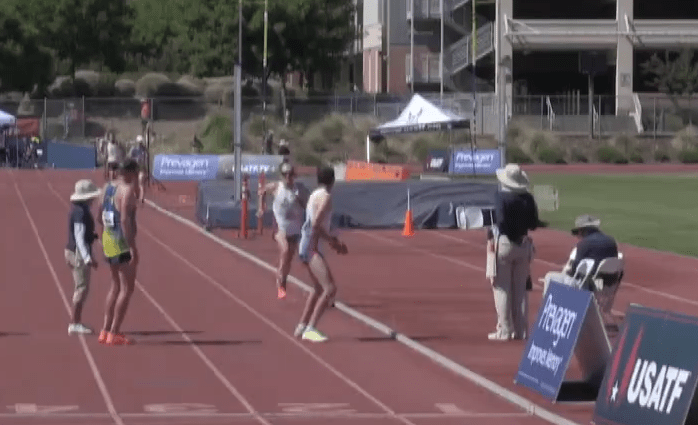
At the gun I cut in a little too quickly and slowly into the curve, and found myself at second to last place. In the backstretch I moved into 5th place and the pace felt easy. One guy from SoCal was a few meters up and I tucked in behind him, planning to pass him after a lap. But he slowed more on the home stretch so I passed him at about 350 meters, crossing the lap in 79. It felt a lot easier than the 77 second first lap at altitude earlier in the month!
At the gun.
From there I just wound it up, picking up my pace as I took the second lap.
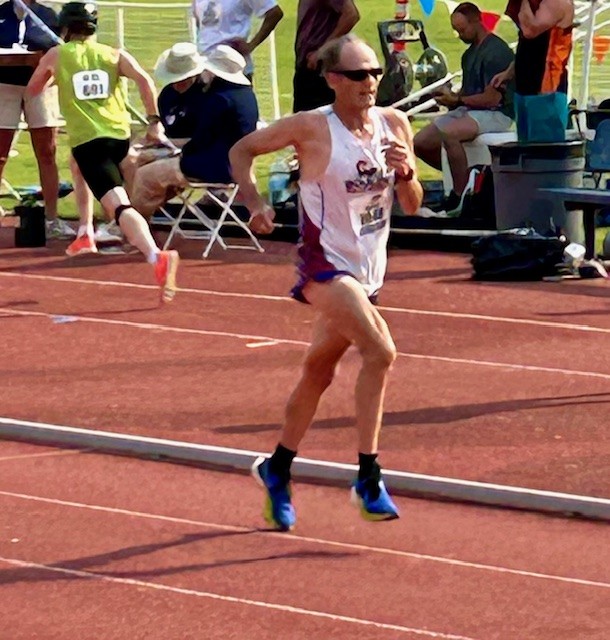
Saving my final kick for the last 80 or 90 meters. I did feel some tightness with about 20 meters to go, but handed it off to Bob with a nifty negative split of 79-74. I am more than happy with a 2:33!
15 meters to go!
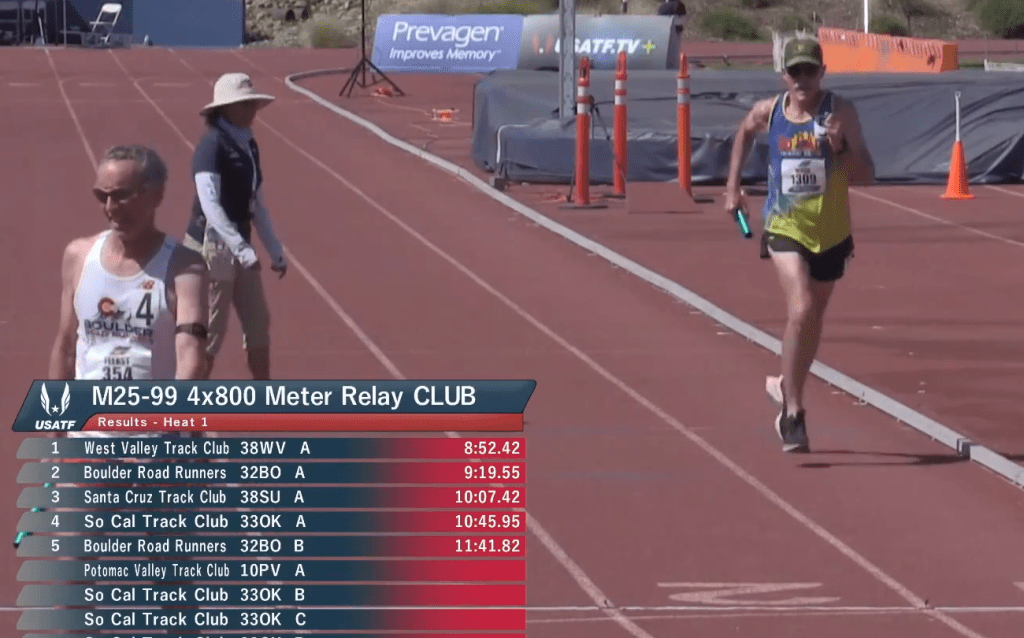
Bob kept it rolling with a 2:55 and the other Bob (who had already run some sprint prelims on Thursday and had the finals on Friday) cruised in a 3:00, and Adam took the final leg in 3:14, holding off a late charge from SoCal, and ensuring a surprise age group win for us in 11:41!
On the screen.
The relay was a big success! The aftermath less so.
After we crossed the line, I milled around the finish area for a few minutes and enjoyed the moment with my teammates and competitors. Soon after Adam had finished however, I started coughing and gagging. It wouldn’t stop. This went on for about 10 minutes and I realized I wasn’t going to make it back to the car, let alone back to the house to get my inhaler, which I had left behind. I usually bring it, but forgot on Thursday. So some officials pointed me toward the medical tent at the end of the straightaway and I asked for some assistance.
It was a little embarrassing to have the EMTs drive in, take my pulse and O2 readings, check my breathing. But it was a relief to get a mist of albuterol and oxygen to calm the attack. This took about 20 or 30 minutes and I missed the celebration with my teammates.
My chest and throat were tight for the rest of the evening and overnight but I was otherwise okay. I ordered a new inhaler as soon as I got home this week.
Saturday the 10000 Meters
The 10K is more in my wheelhouse as a race distance, but I have only run two of these ever on the track (both in 1991, when I ran a 32:11). You don’t have hills and turns on the track, and the going is more smooth but it’s more mental than on the roads or in cross country.
I felt fine for the warm up but was concerned about the heat. It was already in the upper 70s when we lined up at about 8:40 (79 degrees according to Garmin) and it had to be 5 degrees warmer on the track, with the radiant heat from the previous day.
My plan was to run about 3:50-55 per km/6:10 per mile to finish under 38:30 and if I was having a good day under 38. Seemed fair enough based on recent workouts and races, and because I usually perform a little better at 10K than 5K. That was probably a little over-optimistic. My pacing was supposed to be over 6:10 for the first 1600, maybe as slow as 6:20s, and in hindsight I should have stuck with that.
Two guys in their 60s went out quickly in about 90 for their first lap and I held back some and was about 96. An age group rival was right on my heels, almost clipping them. That made me uncomfortable, and run a second or so per lap faster than I would have.
The two 60-64 guys already had a gap in the first kilometer.
I ended up running a string of 91s and 92s, and for 2 kilometers, my California shadow was right there. If I slowed he’d slow. So rather than stepping aside into lane 2 and letting him pass I just kept going. I think in a normal temperature (say 50s or low 60s instead of 80 or more) I would have been fine with the pace. Finally, after five laps he fell off the pace. The leader was running steady 90-91s, and had built about a 20 second lead, and second was less than 10 seconds up. I also tried to maintain my effort but started to worked to reel them in. I crossed 3200 in about 12:20, so effectively right on pace, although I was running by feel then and not focused on times and splits.
The sprayed us each lap at the beginning of the back stretch the cooling water felt nice but it was a brief respite from the heat because the water would mostly dry off by the time you rounded the track again.
Although the two leaders were not in my age group, I treated it like a race that I wanted to win outright. I caught the second runner at 5K. He fell back about 10 or 15 meters and it seemed like I was gaining on first. And so it went. The 1600 splits in the middle of the race were both at about 6:15.
There was a water table on the backstretch but it was in lane 4 and you had to veer out and slow down a little to get your drink. I went for my second drink at about 7000 meters and my competitor seized the moment and scooted past–quickly. By the time we came around for the next lap (I went to the table again to grab a cup to throw some water on my head and shoulders) he already had put on 15 meters.
With less than 3K to go, I had my own race wrapped up as I was coming up to lap the second and third place runners from my division–that was good, but they were not coming back as quickly as I would like, which meant that I was slowing up. The 5th 1600 would be the slowest of my day, I only ran about 6:27. Although I fell back some against the younger competitors, I lapped my age group rivals on the 21st lap–I had it in the bag and all I had to do was hold on.
Sweating it out over the final laps in Sacramento.
I maintained for a few more laps and then picked it up over the final two, crossing the line in a very hot 39:16, nearly 30 seconds slower than the younger runners. But I had lapped the rest of the field. So perhaps not as fast as I’d like, but I’ll take the win, but I am with winning my age division by more than two minutes.
Age group winners! Javier caught the leader Scott with just a couple meters to go to win the 60-64 age group and I came out ahead in the 65-69 category.
Following a big month with a peak in May (25K) and Bolder Boulder 10K just two weeks later I recovered and just trained though June with no cut backs or races, managing about 60 miles a week.
Racing would resume in July.
Normally I like have my races scattered so that I’m focused and not fatigued from training. However, this month I decided to do five races in a span of sixteen days, although the slate consisted of two 800s and two 5Ks and capped off with a track 10000 m. That’s a lot of races but only adding up to 21.6 km, it did not seem like over racing.
Firekracker 5K, July 4
For the third year in a row I returned to Fort Collins for this race. I had no breakthroughs in June but no break downs, just a routine month which counts as a win. I did four consecutive weeks with a double threshold day (early in the week), a second workout day that was either tempo or fartlek, and a long run. And I mixed in a little bit of speed work here and there to get ready for the 800.
I was looking forward for the trip back up to Fort Collins, but kind of fell into a funk a day or two before. I think it was allergies compounded with new contact lenses with a poor prescription. Not to mention I retired from work/career less than a week ahead of the race. And of course extensive political turmoil that if you look at it, was just plain upsetting.
We spent the night in Fort Collins, so we wouldn’t have to get up so early on Thursday. I woke up that day feeling way off, and decided that this would be a non-race and that I would just tempo the first mile and progress from there. Per usual with this race, the first half mile is hectic and crowded, with several sharp turns a lot of fast-starting runners, some with dogs. I don’t know why a race with close to 2,000 people should allow dogs on leashes. It’s dangerous.
Finally, by the time we hit the north side of the cemetery on La Porte Street, just before 1 mile, things had strung out enough to relax and find a stride. Despite feeling groggy all morning and a little bit out of body, right up to the start, I was pleasantly surprised split the mile in 6:20 feeling pretty good. It helped that we had an unseasonably cool morning at 53 degrees, instead of the more typical +/-70 F. So I started moving up and picked off a string of runners including the leading leashed dog runners.
The 2nd mile was even better, which I covered in 6:10 and a good rhythm. So I kept it going as we swept by City Park Lake and the Park itself, and I held it together over the final half mile. I didn’t want to dig too deep because I would be racing an 800 m in just 36 hours, so I quietly accelerated to the finish with a 6:04 final mile, to finish at about 6:10 pace. The time was just 3 or 4 seconds slower than 2022. That day I was a little disappointed, but two years later I’m not complaining about 2024.
Final 30 meters of the July 4th 5K.
Track Series 800 m
Just a day and a half later I found myself trying to be up for my first official 800 m race in 15 years, and one of just a few since my late 20s. I gave the event a shot as a newbie runner when I was a college freshman–way back in 1977–but the 800 was never my event.
Our club was trying to put together a relay for US Masters Track and Field Championships in a couple of weeks and I thought that even though I wouldn’t be fully recovered, it would be a good idea to line up and race at least once. I expected we would have two heats for the men’s division and the slower heat would be won in about 2:30 as it was in the first meet last month. That’d be a high-end mark and I hoped to be in the 2:32-2:35 range on Friday.
None of that worked out. The race only had a dozen runners, nine were under the age of 30 and all would run 2:15 or faster. There were three old guys, myself, my club teammate (and putative relay partner Dan), and a gentleman in his 70s. Dan wasn’t planning to run at all, but his partner is a race official who saw my name so she signed him up after the entry deadline had closed. I was a little but what? Dan has a very competitive do-or-die approach to racing, often closing his emails with “Strength and Honor” whatever that means. He also stated several times that he would not go to US nationals just to win, it was get the American record or stay home.
Dan’s attitudes and mine sometimes clash. I was a little nervous going in, knowing how he likes to race (lurking and stalking and making a move later in the race), and that if I have an off day he can run me down. I don’t like losing to anyone in my age group at local races, including Dan.
We did warm up together, and of course the race was delayed by some 40 minutes. We lined up on the outside of the waterfall start. The gun went off, and the field sprinted away in a matter of a few meters. I laughed a little.
It was my last laugh of the evening. I could feel Dan’s footsteps behind me, but chose to focus on finding the right pace (figuring a 38-39 first 200 would be a good start). The leaders had 40 meters on me on the backstretch and footsteps behind faded but I had no I idea by how much. I was running totally alone–just what I didn’t want, this race was supposed to be a calibration.
I came through the 400 in 77-78, some 15 to 20 seconds behind the leaders and (later I would learn) 6 or 7 seconds ahead of Dan. At that point I was feeling okay, and hoping that I could hold on for another lap at that pace. However, after rounding the curve, with 300 to go, my legs started to tighten up. I picked it up there (in hindsight should have kept the effort even for another 150 meters or so), and I sped down the backstretch for about 80 or 90 meters. But with 200 to go my legs and lungs really locked up and I was just jogging the curve (probably at 3:00 pace). With a 100 to go, I knew Dan would be coming on strong so I threw down one last surge which I held for about 50 meters. Then I locked up one final time. I was moving forward but not fast.
Mu goal time was out the window, I wouldn’t be near 2:40, let alone 2:32-35, but at least I was holding off my teammate/rival. Five meters to go I had it. Four, three, one more stride! Nope! He got me with a meter to go! To lead for 799 meters and to falter, that was a bit of a slap in the face. But I deserved it, not being 100% rested and I ran a poor race tactically. I congratulated Dan, and moved on.
Two meters to go, not looking good!
State Championship 5K
I took my lump of coal on that one, and set out for a good week of training leading up to the 5K.
Going into race weekend my attitude wasn’t great, another rival had just turned 65 I figured I would be pressed in this one as I had been in the 800. However, that’s racing, and racing when you have good competition and a target on your back.
Race day dawned a lot warmer than in the Fort Collins race just nine days prior, by race time the temperature was in the mid 70s and climbing. With a number of solid competitors in the 60+ age division (no Dan this time), I resolved to go out competitively, but not too fast. We were off and I quickly settled into a 6:05-6:10 pace with two runners in their early 60s some 5 or 10 seconds up, and my new age group rival just behind me. The course is a sidewalk around a lake, so it’s fairly narrow. Just before the mile I passed the two age rivals, feeling solid, and I hit the mile in about 6:06 looking ahead and trying not to think about those in my wake. That split was quite a lot faster than the 6:20 I did in Fort Collins, but this course was flatter at the start. So I pressed on into mile 2. I only picked off a couple runners for the remainder of the race, primarily just holding my position.
2nd mile was 6:10 and the trail had a switchback with a mile to go, and there I could see that my age rivals were well behind. That gave me the rare opportunity to hold back a little bit on the final mile, which I ran in 6:15. I did kick it in over the last 150 m to finish in under 19 minutes for the first time at altitude since 2021. The course was said to be a little short, but close enough. Job done.
Making my way to the final stretch in the 5K.
Three races in nine days, two good 5Ks and a poor effort at 800. Would that be enough (or too much) to be ready for Nationals, which would start 1,200 miles of driving and only five days later?